How Much Water is Hidden in a Cheeseburger?
There's been a lot of talk lately about how much water AI uses, but the amount of water that the animal agriculture industry uses is rarely talked about unless it's being used to diminish the concerns of AI water usage. This article will dig into how much water animal agriculture uses, why it uses so much and the tangible impacts that has on our environment. There will also be a small section covering AI, but we will not be pitting the two against one another as they are two separate and legitimate issues.
Why is this a problem we should care about?
Before we can dive into the details of how animal agriculture plays into this, we need to define the problems around water usage and provide tangible examples of the impacts.
Water Withdrawal
Water withdrawal is when water is removed from a river, lake or aquifer. Some of it might be returned later. An example of this would be water that is used for cooling machinery within various industries (factories, power plants, paper mills, etc.). They can take water directly from sources like rivers, lakes or ground wells, then they use this water in their processes to cool down equipment or other streams. Once the water is used for cooling, it becomes warmer than it was.
Releasing back warmer water is not good for the water source, because even a slight temperature increase of a couple of degrees can disrupt local ecosystems. Warmer water can cause more algae to bloom. This algae will eventually die and decompose; the decomposition consumes oxygen in the water. Low oxygen levels can result in aquatic life deaths.
If a facility is constantly pulling water and releasing warmer water back to the source, this can cause the aquatic life to adapt to the new temperature. If the plant/facility suddenly shuts down for an outage, or stops releasing warmer water back to the source, this can cause the water temperature to decrease (back to where it originally was). A sudden temperature drop can shock the fish and potentially even kill them.
Changes in temperature can also confuse natural breeding cues, which are often based on seasonal temperatures (because fish don't have calendars).
Oftentimes, the outlet water cooled down using cooling towers or cooling ponds, but may still be warmer than it was when it was pulled from the source. Some of this water may be "lost" or transferred to the air through evaporation. It's pretty unusual to not "consume" any water through water withdrawal.
Water Consumption
Water consumption is when the water that is withdrawn (like we just went over) is either evaporated, incorporated into a product or is just unavailable for immediate re-use.
Water can be consumed through evaporation in an industrial setting where source water is used for cooling and has to go through its own cooling process (like a cooling tower) before it can re-enter the source water. Water can also be evaporated in the agriculture industry. Water is applied to crops. Some of this water is absorbed by the plants, but much of it evaporates, making it unavailable for immediate re-use.
Some examples of where water is incorporated into a product would be the beverage and concrete industries. They pull water from a water source, and this water leaves the area with the final product.
Green Water Footprint
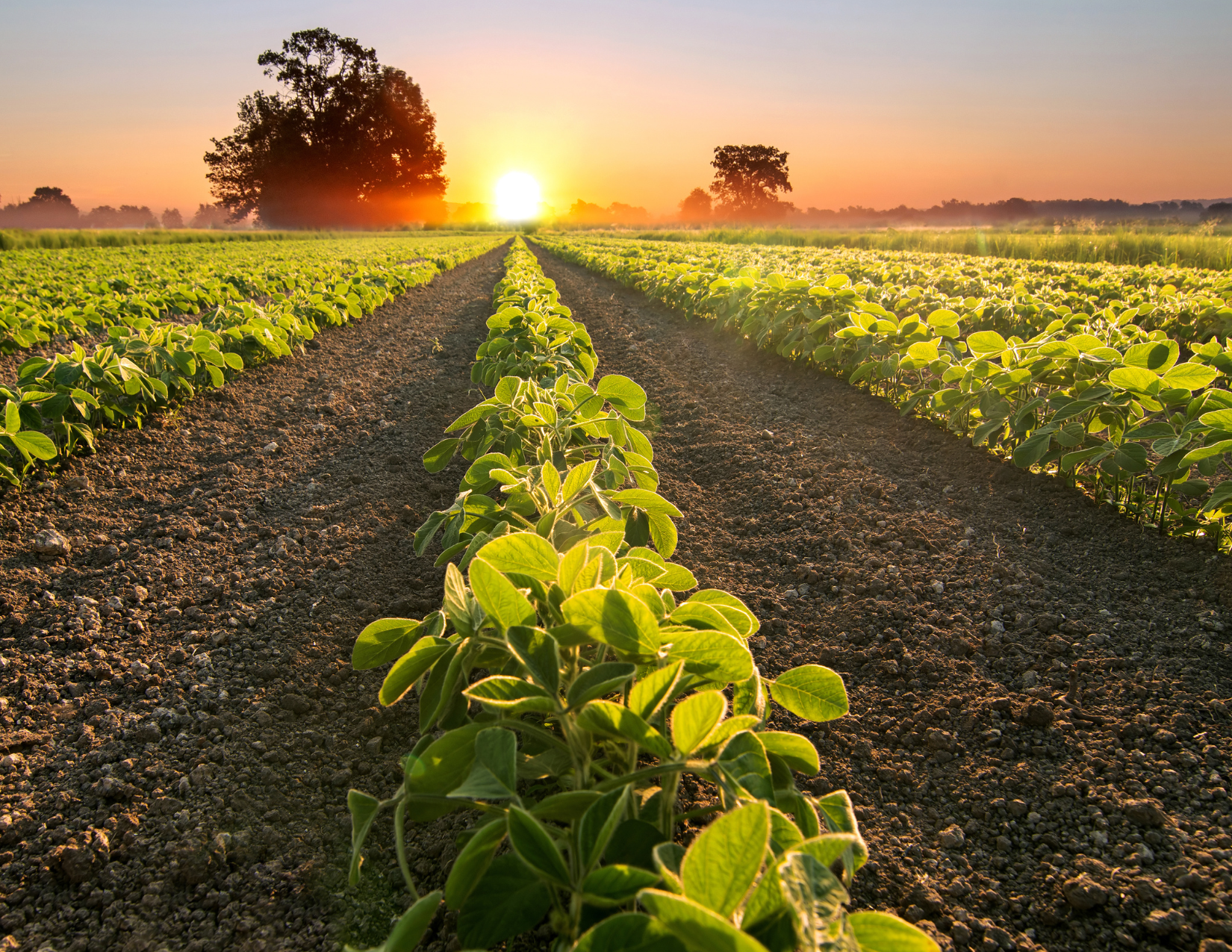
Green water is rain water that is stored in the soil and consumed by plants/crops, and then released back into the atmosphere through transpiration. Dense agricultural areas that absorb high amounts of rainwater can reduce the volume of water available to replenish lakes, rivers and aquifers.
Issues with Green Water Consumption
Large areas of cropland can actually alter the local water balance.
- Reduced runoff. Crops capture water in their roots that would normally flow over the surface as runoff into nearby lakes and rivers, if the crops weren't there.
- High amounts of crops can reduce the amount of water that pass below the root zone to recharge underground aquifers.
- Maximizing plant growth minimizes downstream liquid water availability.
Blue Water Footprint
Blue water is surface or ground water that is consumed through irrigation, drinking, cooling or processing. This would include the industries we mentioned in the earlier section. For animal agricultural, this would include crops, like soy and corn, that require irrigation.
Issues with Blue Water Consumption
An aquifer is a layer of permeable sand, gravel and other geological material that naturally contains water within the pores and cracks. Water enters the aquifer through:
- Rain and the melting of snow that soaks through the soil.
- Leakage from lakes and rivers.
It can take hundreds of years to fill an aquifer. Cities primarily use water from aquifers, lakes and rivers for their drinking water.
Aquifers can become depleted when we take more water out than they're getting back. An example of this could be irrigation pumping for watering crops.
- The pump removes water surrounding the well.
- The water table falls locally, forming a depression around it.
- Nearby groundwater begins moving towards the well (and potentially away from other places it would naturally go like rivers and streams).
- Continued pumping expands and deepens the impacted area.
- Neighboring irrigation and household wells may have to reach further down to keep pulling water.
- If pumping continues faster than the recharge, regional water tables decline.
Tangible Impacts
More energy may be needed to pump further down, and farmers (and neighboring communities with private wells) may need to spend money to deepen the wells. This is not only a financial burden on the farmer who used the water, but on neighbors who will now have to pay the price. The fields could become uneconomic to continue farming on. Sometimes they will move to different crops that can rely on just rainwater, but farmers may also just stop using the land for agriculture altogether.
Pumping from lower in the well may pull poorer quality water or even salty water. This can result in lower crop yields. This could cause higher fertilizer usage or the fields may become uneconomical to continue farming on.
Additional fertilizer can also increase the amount that runs off into streams. This can promote algae blooms, which can deplete oxygen when they die, causing issues (and often death) for aquatic life. Additional fertilizer runoff can also increase drinking water treatment costs.
Streams that are connected to the aquifers may also lose flow. Groundwater pumping can reduce spring and river flow and dry out nearby wetlands.
Some aquifers contain layers of fine clay and silt. The water pressure actually helps to keep these layers expanded. When you deplete the water, the sediments can compress, which can cause ground surfaces to sink. There can be damaging to canals, roads, pipelines, and buildings.
Likelihood of flooding also increases.
Grey Water Footprint
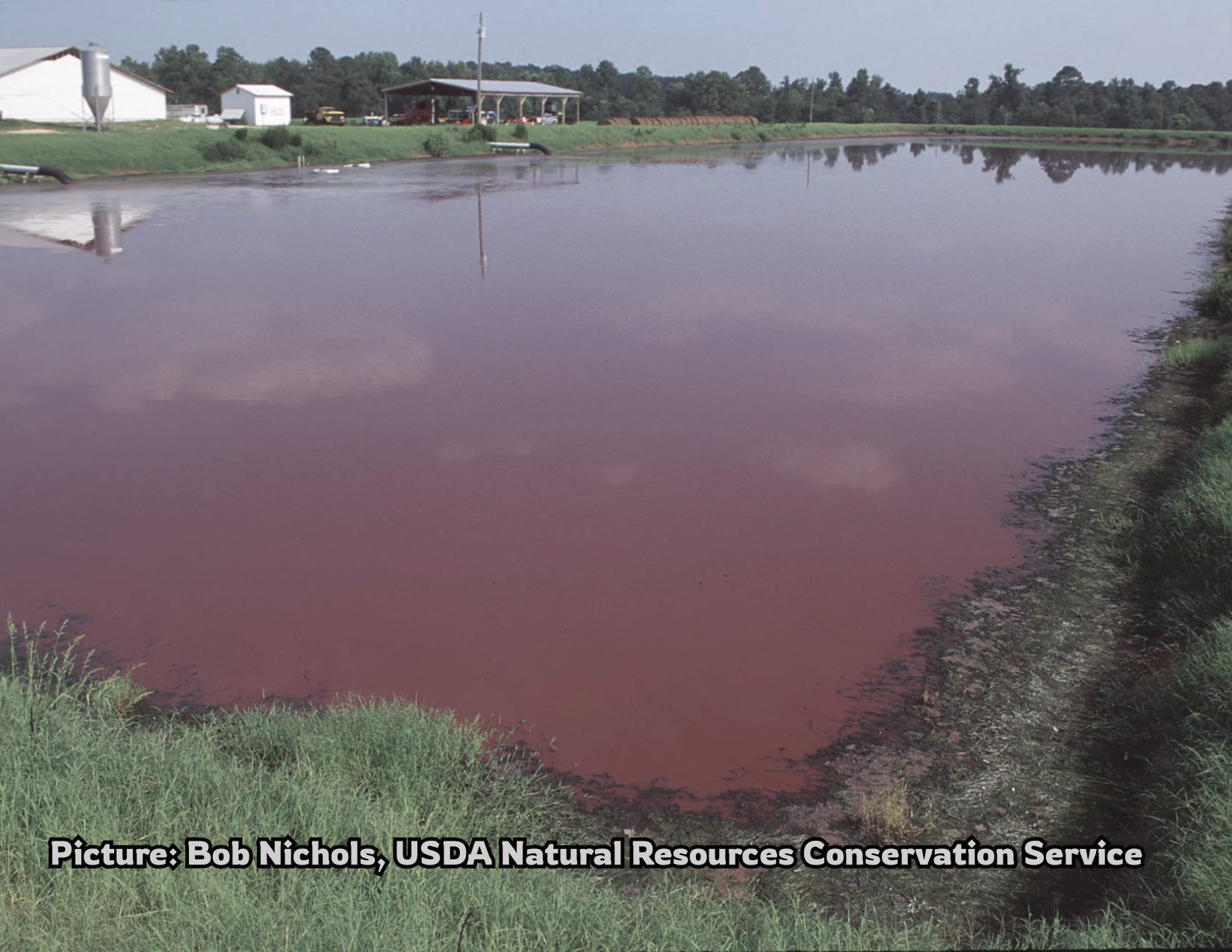
Grey water is less straightforward than green and blue water were, because it's not technically water that is withdrawn or consumed. Grey water is the theoretical amount of water that would be needed to dilute pollution from various industries.
In animal agriculture, this could be manure or fertilizer runoff. We have an entire blog post on the real-life impacts of manure from factory farms, if you want to get into the weeds.
Manure can contain nitrogen, phosphorus, organic material, ammonia, pathogens, metal, antibiotic residue, and hormones. Manure can enter river or lakes through runoff from "field application" (they spray the field with a manure/water mixture).
Manure can cause algae blooms that eventually turn into loss of aquatic life, and, in some cases, hypoxic dead zones where aquatic life literally cannot survive.
Manure pollutants can enter drinking water through:
- Waste lagoon leakage
- Manure spills
- Over-application of manure to fields
- Runoff after rain or snow melting
- Leaching through the soil
Rural households that rely on private wells are often most impacted because their water doesn't come from the city (where it's treated).
Environmental Justice
Who is the most impacted by all of this?
As we discussed in our Pig Poop Lagoon Podcast episode, factory farms are more likely to exist in lower income and minority communities. Why though?
- Rural land is often cheaper.
- Some of these communities may have less political representation.
- Residents may have fewer financial resources to take legal action.
- Property values can decrease when factory farms are built nearby, which makes it even more challenging to relocate elsewhere.
In general, only a small fraction of the crops and livestock are consumed by the people who live in the areas where they were grown and raised. Most of them are shipped off to other locations, and the environment and the people who live near the farms pay the real price.
Animal Agriculture's Water Footprint
Globally, agriculture accounts for approximately 69% of all water withdrawals. Industry makes up 19% and municipal uses make up the remaining 12%. The agriculture figure includes both food crops and animal feed crops (it's not exclusively livestock).
The most comprehensive global livestock water-footprint assessment estimated that animal production had a total footprint of about:
- 2,422 cubic kilometers per year (~640 trillion US gallons/year)
- 29% of the total global agriculture water footprint
Of the livestock footprint:
- 87.2% was green water (rain water).
- 6.2% was blue water (pulled from water sources like lakes, rivers, wells).
- 6.6% was grey water (amount of water needed to dilute the polluted water coming from livestock or crops grown for livestock).
These numbers may be slightly different now, as this data is over a decade old but it's the most recent information we have, and should give you a good general idea.
Breakdown of livestock's water footprint.
- Approximately 98% of livestock's total water footprint came from producing feed.
- Direct animal drinking water represented about 1.1%.
- Service water, like the water used for cleaning, was approximately 0.8%.
- Feed-mixing water only represented about 0.03%.
So to kind of summarize this information, the majority of the water footprint for animal agriculture is the result of how inefficient it is to raise animals for food. An easy way to think about this is to ask yourself this question:
Would you rather have the meat of a cow or all of the food that cow has ever eaten in their entire life?
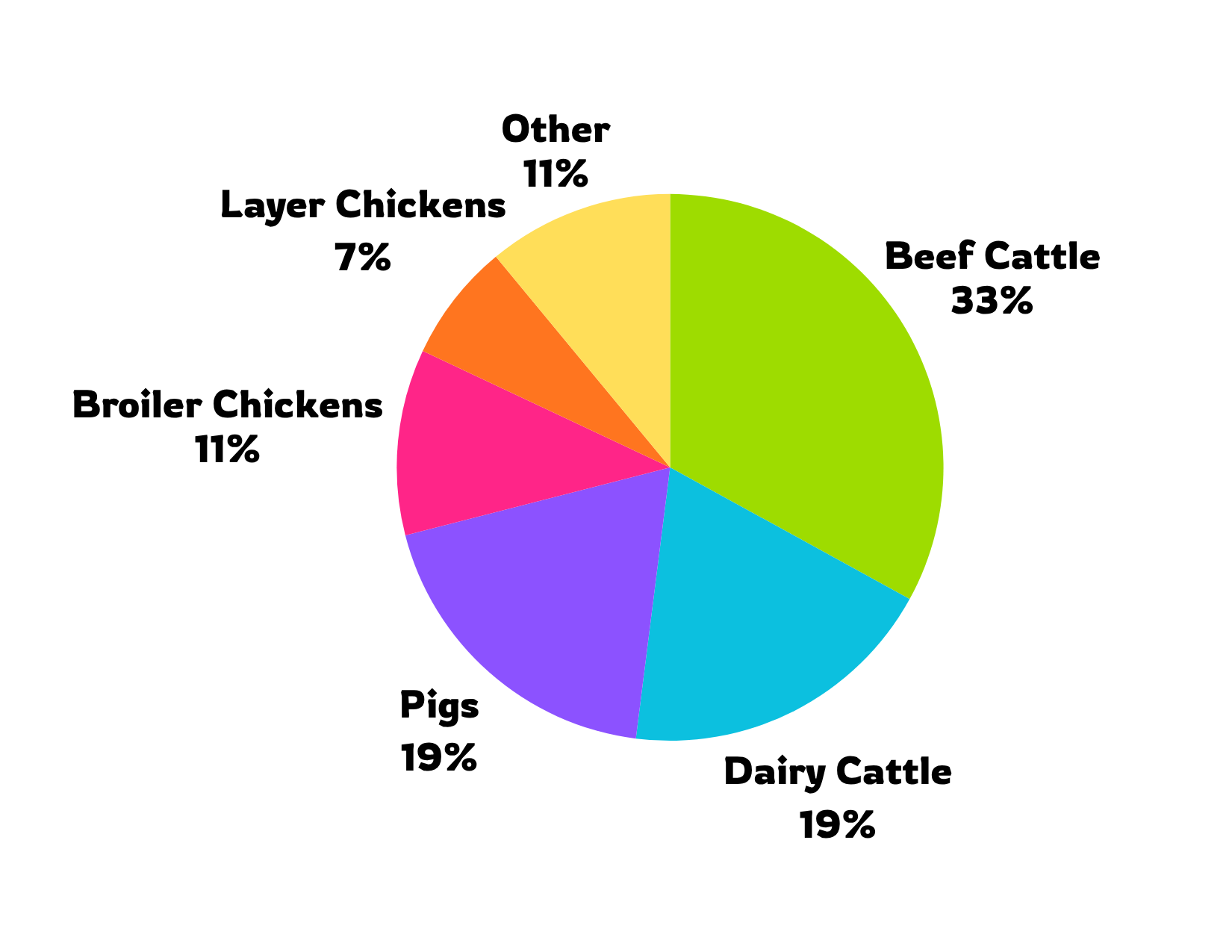
The chart below shows how the livestock water footprint is divided up between different animals. For example, beef cattle make up 33% of the total livestock water footprint.
Water footprint of common animal products
You may have seen water footprint of various food products compared to showers, because it's an easy way to visualize the impact. In the comparison below, an average shower is assumed to be 17.2 gallons.
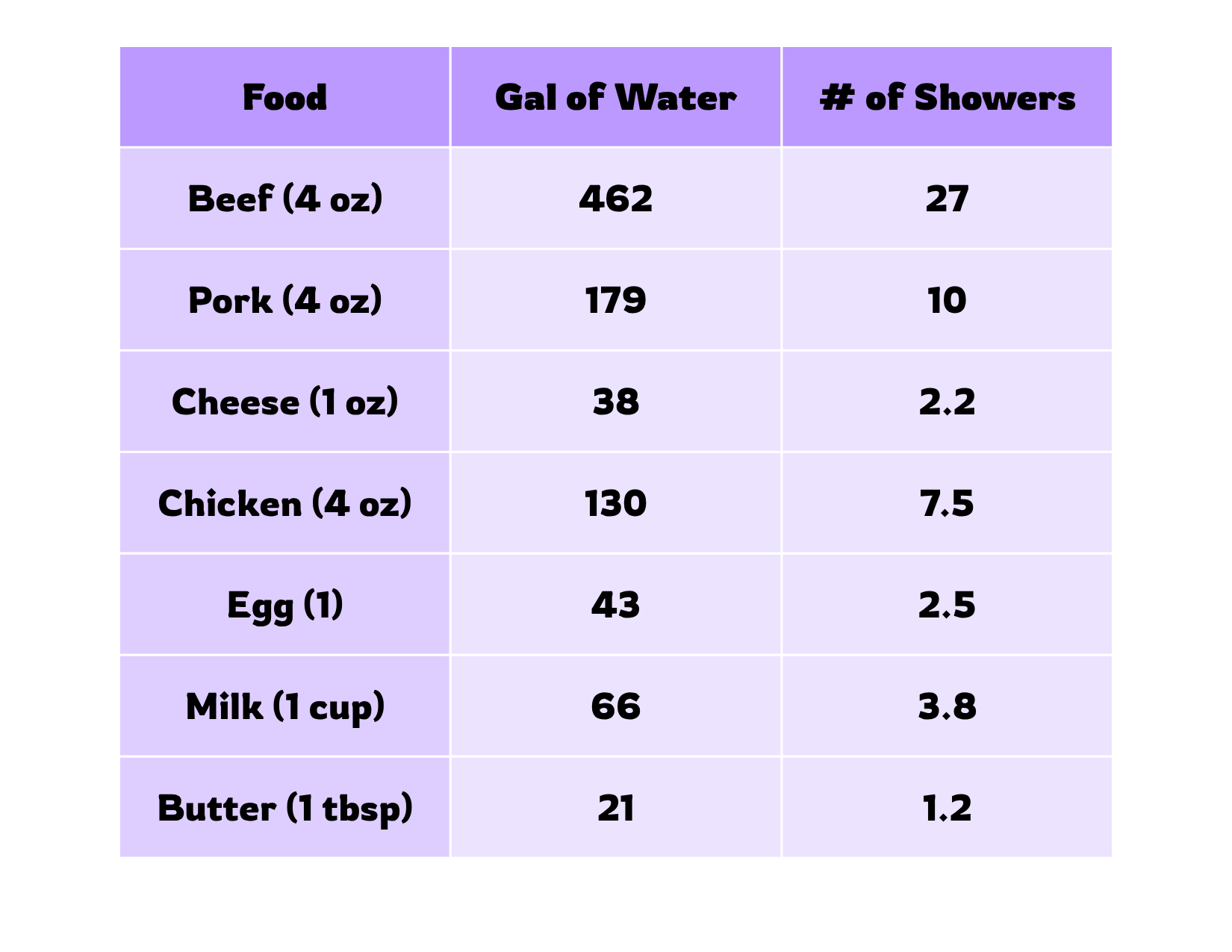
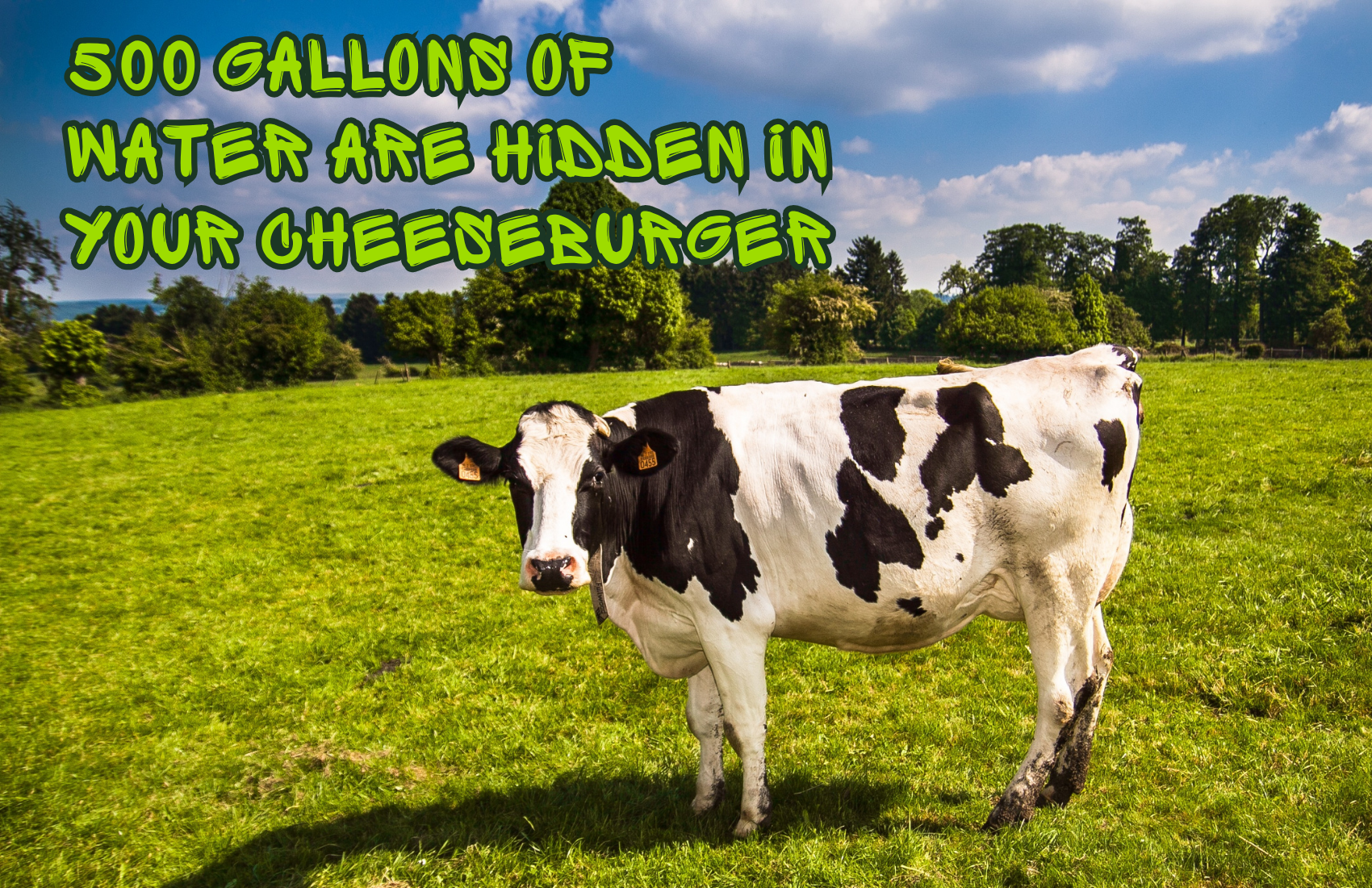
I think most people would be shocked to know that there are ~500 gallons of water hidden in their 1/4 lb cheeseburger. And this number only includes the 4 oz of beef and 1 slice of cheese. It's even higher when you add in the bun, toppings and condiments!
Water footprint of common plant-based products
The table below shows the same data but with similar plant-based products.
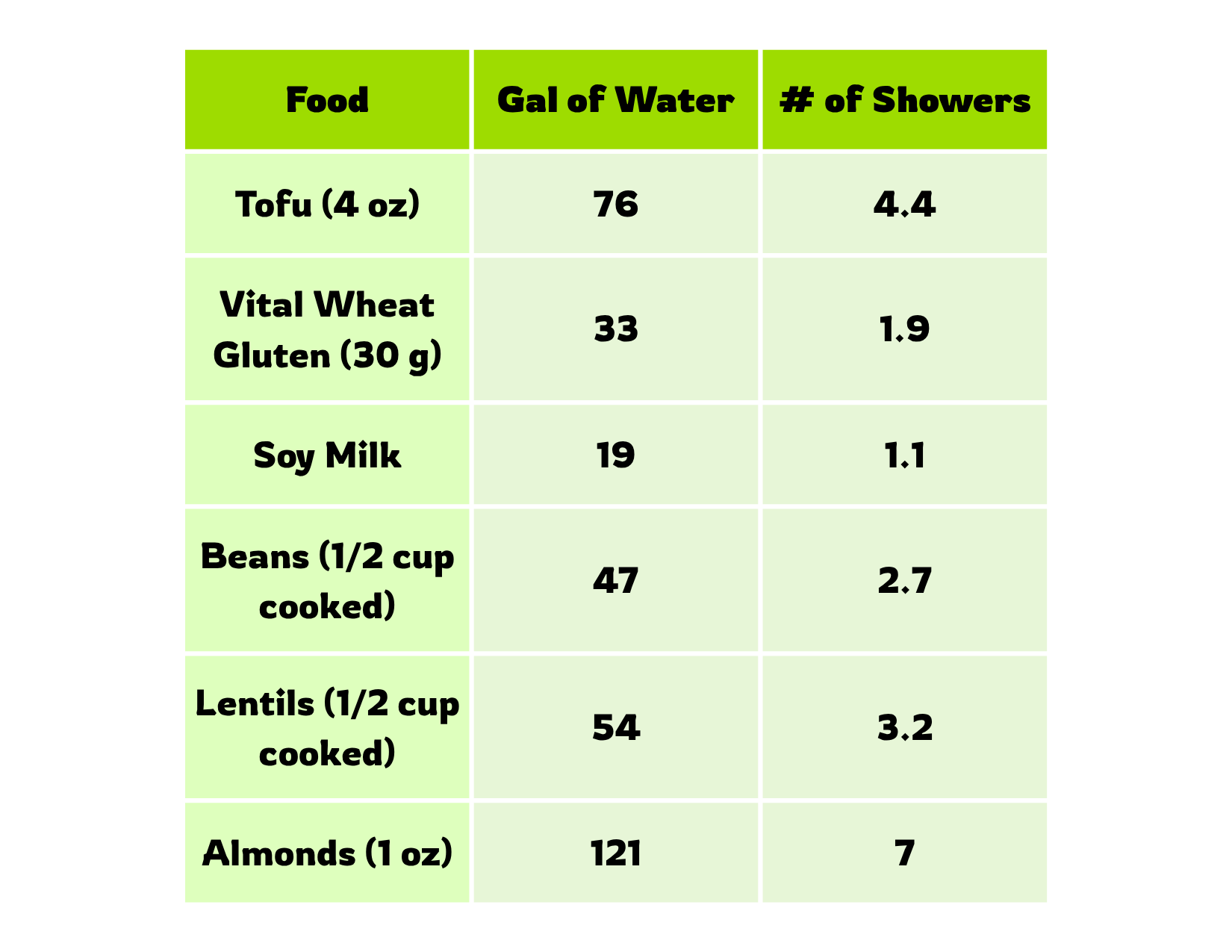
I think one of the most interesting comparisons is dairy milk (66 gallons per 1 cup) and soy milk (19 gallons per 1 cup). Cow's milk has over 3 times the water footprint of soy milk. They're nutritionally very similar and this would be such an easy swap that you could make if you were just starting to work towards a plant-based diet!
Beef Cattle
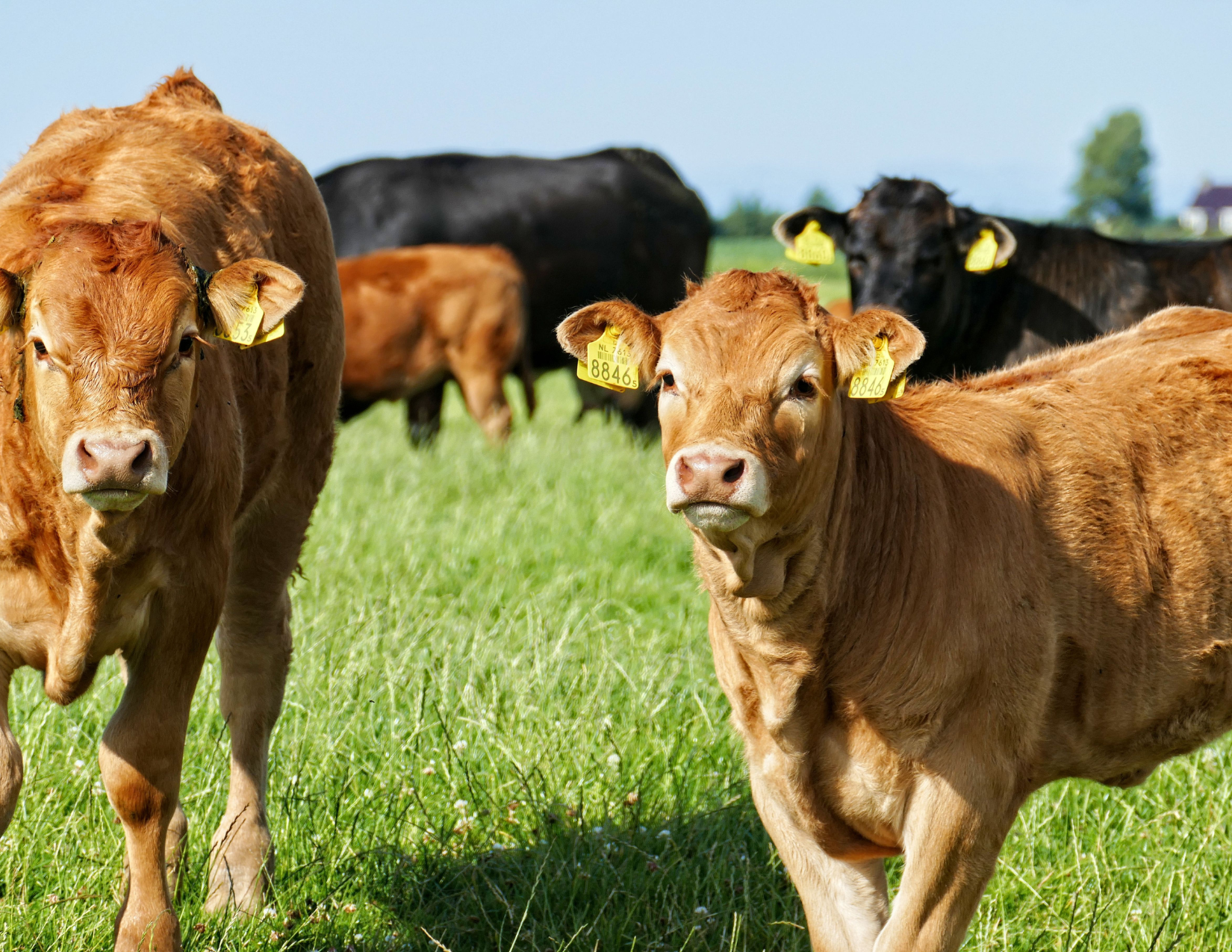
Beef Cattle are the largest contributor to the livestock water footprint.
- Beef Cattle make up 33% of the total livestock water footprint.
- 4 oz patty of beef is ~462 gallons of water.
- Beef is 1.9% efficient. This means that out of 100 calories that are given to a cow in the form of feed, only 1.9 of those calories would be effectively converted towards an animal product that consumers could purchase.
Why is this number so high?
Cows live longer before slaughter than most of the other animals used for food. An average cow's lifespan is 18-22 months (compared to 6 months for pigs and a little over a month for chickens). This is still an incredibly artificially shortened lifespan, because in nature, cows typically live 15-20 years and sometimes up to 30 years old!
Because they live longer, they consume more food over that period of time. Like we've touched on already, the majority of the water footprint from animal agriculture comes from the food the animals are eating.
Cows also have very large bodies, which means that they require a large amount of calories just to maintain their metabolism, bones, organs, etc. Think of it in terms of maintenance calories - the number of calories you personally need to consume to maintain your current weight. Now imagine how much a cow (that can weigh between 1,000 and 1,800 lbs) would need to eat just to maintain their body weight. Now, consider how many additional calories they would need to constantly put on weight at the rates in which we see in the animal agriculture industry.
Some of their feed comes from pasture and fodder, which will result in a green water footprint.
Towards the end of their shortened lives, most beef cattle are moved to Concentrated Animal Feeding Operations (CAFOs), where they are fed grain to make them gain weight rapidly. Grain finishing can introduce blue water through irrigated corn, soy and other crops. It can also introduce grey water from the fertilizer and manure pollution.
Dairy Cattle
Dairy Cattle are the second largest contributor to the animal agriculture water footprint.
- They represent 19% of the water footprint.
- 1 cup milk = 66 gallons of water.
- 1 oz cheese = 38 gallons of water.
- 1 tbsp butter = 21 gallons of water.
- Milk is 24% efficient.
Why is this number so high?
Some of the reasons why Dairy Cattle have such a large water footprint are the same reasons why Beef Cattle have a large water footprint. They are large animals who require a lot of food to grow and maintain body weight. Dairy Cattle actually live longer, on average, than Beef Cattle. Factory-farmed dairy cows typically live to be 4-6 years old, which is only a small fraction of their natural life (20 years or more).
Some additional reasons why the water footprint is so high:
- Dairy cows only produce milk for a fraction of the time they are alive.
- Cows drink water directly. A lactating (milk producing) dairy cow drinks about 30 - 50 gallons of water per day.
- There is a decent amount of equipment that must be washed in a dairy farm.
- Milk is cooled and processed which can use additional water.
Milk, itself, has a high water content which is why its water footprint seems on the low side. Once you concentrate it down into cheese and butter, the water footprint per ounce gets higher, because you are also concentrating the inefficiencies.
Pork
Pork is the third largest contributor to the animal agriculture water footprint.
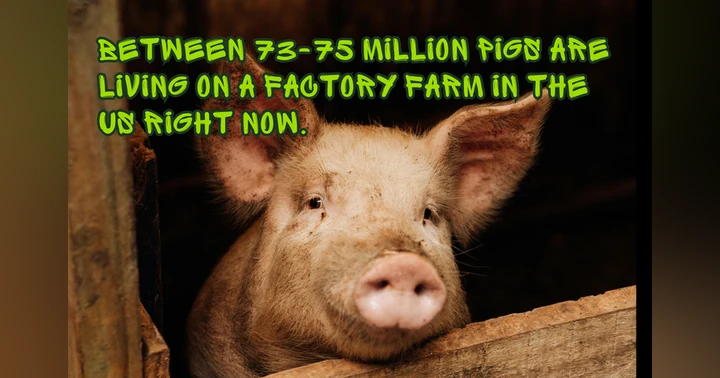
- Pigs represent 19% of livestock's global footprint.
- 4 oz pork = 179 gallons of water.
- Pork is 8.6% efficient.
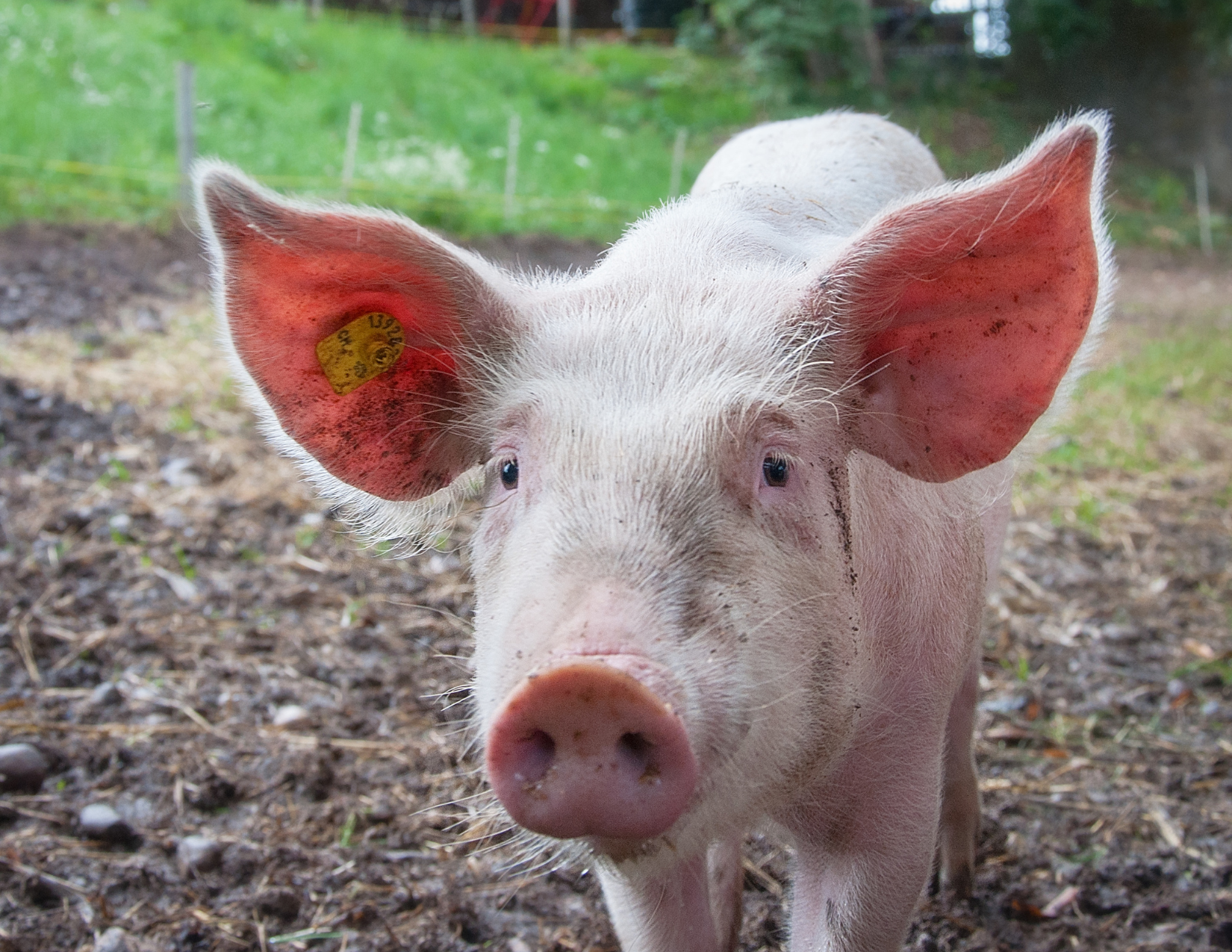
Pigs live up to around 6 months old in most pig farms (their natural life can be up to 15-20 years). During these 6 months, they are continuously putting on weight, mostly in CAFOs. Their feed relies heavily on corn and soy which require a lot of water to grow, specifically irrigated water (blue water).
Manure storage and land application result in grey water.
Broiler Chickens
In case you didn't know, there are two types of farmed chickens - broiler chickens and layer chickens. Broiler chickens are the chickens who are raised for food. They have been genetically bred to put on weight extremely fast, and a greater portion of their overall body weight becomes meat that can be sold (compared to cows and pigs).
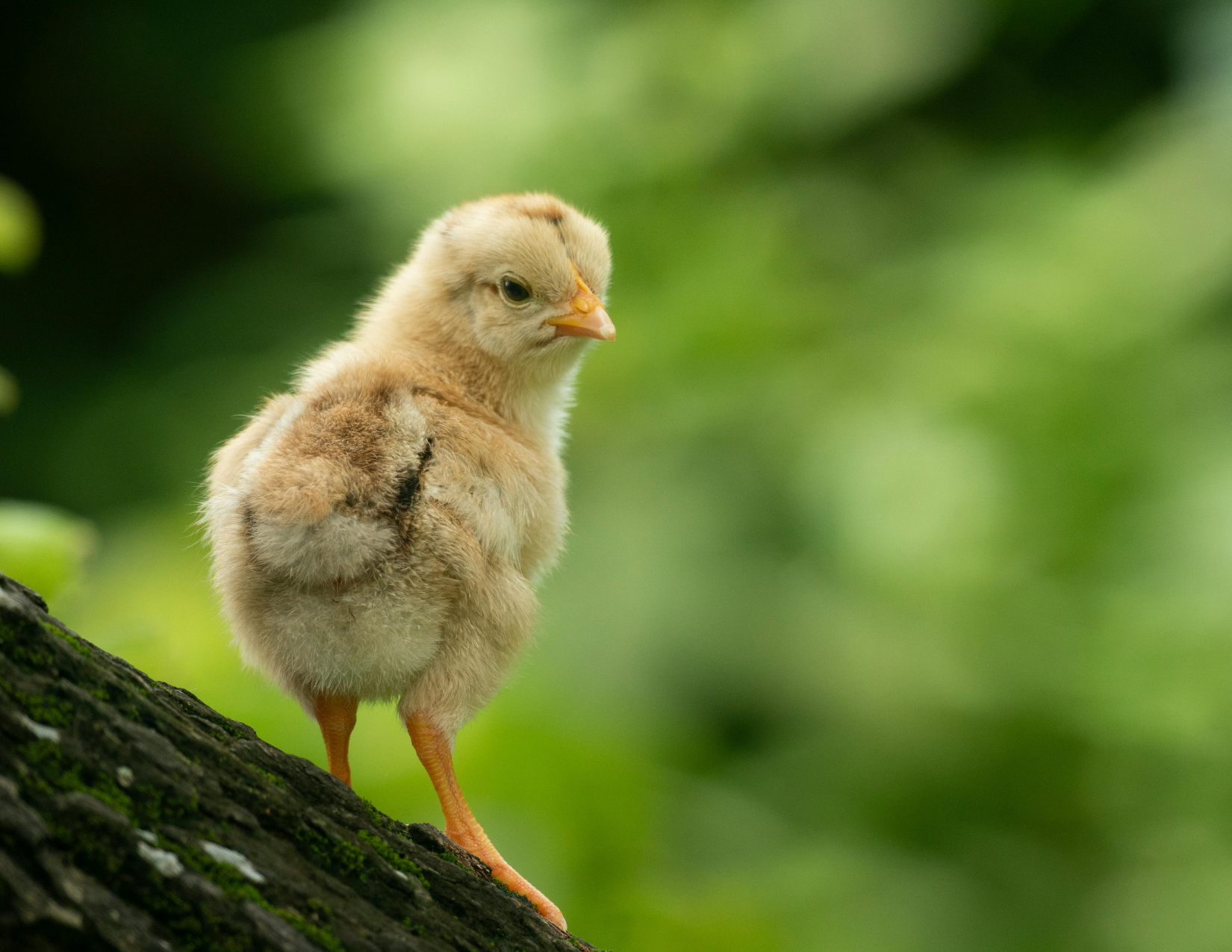
- Broiler chickens represent 11% of livestock's total footprint.
- 4 oz of chicken = 130 gallons of water.
- Poultry is 13% efficient.
Chickens are "more efficient" than pork and beef, because chickens are smaller animals and they live significantly shorter lives. The average chicken lives a little over 1 month before they are slaughtered. In the nature, they can live up to 5-10 years.
Chickens rely heavily on crop feed. Crops like corn and soy require land, fertilizer and irrigation.
An extremely large number of chickens are raised and slaughtered every single year. 78.5 BILLION chickens were slaughtered in 2024.
Layer Chickens
Layer chickens are specifically raised for laying eggs. They have been genetically bred to lay an unusually high number of eggs. Because of the body type differences between broiler chickens and layer chickens, layer chickens are never raised for food.
Since male chickens can't lay eggs, they are killed within hours of being hatched (once they can be gendered). About 7 BILLION male chicks are killed each year, either using high-speed mechanical grinders or carbon dioxide chambers.
- Layer Chickens make up 7% of livestock's total footprint.
- 1 egg = 40 gallons of water.
- Eggs are 19% efficient.
A laying hen must be hatched and raised before then can lay eggs, which contributes to the inefficiency. There is also egg washing, grading, refrigeration and packaging, which can also consume water.
AI Water Footprint
AI water usage is split into two main parts. There's on-site cooling and indirect water usage from the power plants that are needed to run AI servers. In 2023, Lawrence Berkley National Lab did a study on this, which estimated that U.S. data centers (this includes non-AI data centers as well) used about 228 billion gallons of water. Only 17 billion of that was for on-site cooling and the remaining 211 billion gallons were tied to electricity generation (cooling at the power plants).
AI data centers have definitely increased since 2023, but unfortunately there aren't current numbers for this information.
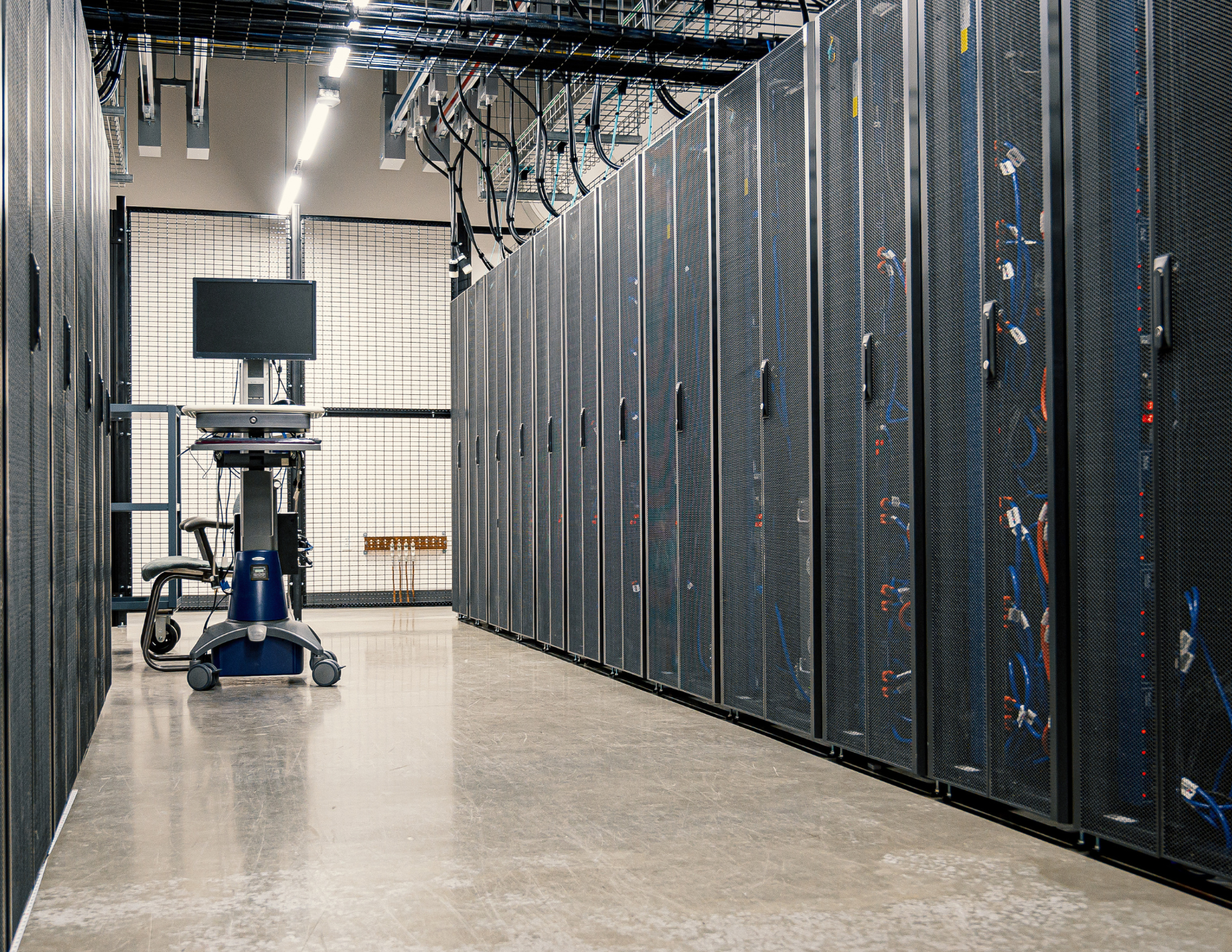
There can be a few different ways to do on-site cooling at the data centers themselves. You can have closed-loop which keeps running back through, but most of them use open-loop (also known as once-through cooling). For once-through cooling, water is pulled from the water source, comes through the process to cool stuff down, then the warm water either gets cooled though cooling towers (or something similar) or re-enters the source water as warmer water. If something like a cooling tower is used to cool off the water before it re-enters the source, a decent amount of the water is lost to the air through evaporation.
Most of the water used for cooling at the data centers comes from city drinking water sources, which is why this is such a large concern. Some of the cities where AI data centers are being built were already running in the negative, which means that even before the data center, water was being used at a faster rate than it was replenishing. When you build an AI data center in a location like this, it only worsens the issue.
Since most AI data centers use once through cooling, the water that is evaporated is basically lost from the area. That's not to say that the water is gone forever. It just leaves the area and doesn't go back to the source water, and it could literally end up anywhere in the form of precipitation (the whole planet is basically one massive terrarium).
For the power plant cooling, almost all of that water comes from surface water sources, like rivers, lakes and seas. Even though this isn't pulling directly from city drinking water, doesn't mean it doesn't have its own issues. It can result in all of the issues we discussed in the blue water footprint section of this article. The power plants are supplying power to residential houses too though, so this can be a strain on the entire power system, especially during peak times like heat waves.
AI vs. Animal Agriculture
As of 2023, the combined on-site and power plant water usage that goes into all U.S. data centers is still about 10 times less than the U.S. meat production. Some things to consider:
- Both the animal agriculture and AI data center data sets are aged. Specifically for the AI piece, a lot may have changed since this space is growing quickly.
- A large amount of AI data centers are directly using city water. Very few farms within the agriculture industry use city drinking water. This is an important distinction.
- The vast majority of the AI Data Center's water footprint comes from blue water, while agriculture is mostly green water. A blue water footprint is generally considered more impactful and damaging to the environment than a green water footprint.
How you can personally make a difference
The biggest thing you can personally do to make a difference is replace the meat and dairy in your diet with plant-based options. Lower impact plant-based protein sources include beans, lentils, tofu, peas, tempeh, TVP and seitan! For dairy replacements, choose soy and oat-based products over almond-based products.
If you need help switching to a plant-based diet, join our Discord! We're happy to answer questions and offer support!
Reduce your personal food waste. Over 1/3 of all food produced in the U.S. is never eaten.
- Do your best to plan your meals and not over-buy produce.
- Freeze leftovers and produce before they go bad.
Ask local schools, hospitals, restaurants and workplaces to offer plant-based options.
Support environmental justice organizations led by affected residences.
Ask elected officials to include water scarcity and cumulative community exposure in permitting decisions (this can apply to both animal agriculture and AI data centers).
Limit your person AI usage. Creating videos and pictures uses significantly more water than chat.
Disc golf instead of golf! Golf courses use a ton of water to maintain the grass. Disc golf courses are kind of just out in the woods!
Buy energy efficient appliances like washing machines and dishwashers.
Use low-flow toilets and shower heads.
Conclusion
Animal agriculture has a huge water footprint as it is highly inefficient. One of the easiest ways to reduce your personal water footprint is by moving towards a plant-based diet. It's better for the planet, the animals and the humans.
Just because the animal agriculture industry has a larger water footprint than AI data centers doesn't mean that we shouldn't be concerned about the water usage of AI. We should stop trying to pit veganism against those opposed to AI, and, instead, try to educate them on animal agriculture's water footprint so that we can all work together.
If you have any questions or need some support, shoot us a message!
I’m a Chemical Engineer by trade, but love cooking in my kitchen and coming up with new recipes! I also like knitting in straight lines (I can only make scarves and blankets lol), listening to music (rock and Taylor Swift), hiking and disc golfing!
I went vegetarian when I was 12 years old after a middle school teacher of mine mentioned that he was vegetarian for a few years when he was in the Peace Corps. Before then, I had never heard of or met a vegetarian and didn’t know I had a choice in whether or not I ate meat. Several years ago, I read the book “Eating Animals” and immediately went vegan after finally realizing the horrific realities of the dairy and egg industries (spreading awareness is hugely important because many people really have no idea).

Is leather a byproduct?