The Pig's Side of the Story

Pigs can solve mirror puzzles, hold grudges, and comfort a friend who's having a bad day. So why do we call them dumb? Last week we covered what factory farming does to the water and the air. This week we cover what it does to the pig. In this episode: • Where "dirty, dumb, eats anything" came from and why every one of those is something we did to them, not something they are • Seven of eight pigs found food they could only see in a mirror, in an average of 23 seconds • A pig can live 1...


Pigs can solve mirror puzzles, hold grudges, and comfort a friend who's having a bad day. So why do we call them dumb?
Last week we covered what factory farming does to the water and the air. This week we cover what it does to the pig.
In this episode:
• Where "dirty, dumb, eats anything" came from and why every one of those is something we did to them, not something they are
• Seven of eight pigs found food they could only see in a mirror, in an average of 23 seconds
• A pig can live 10-15 years, sometimes 20. On a factory farm it lives about six months
• A 280-pound pig gets roughly eight square feet
New News
• Faunalytics surveyed 801 Indian Gen Z adults on plant-based eating
Sources
• EFSA Panel on Animal Health and Welfare, "Welfare of pigs on farm," 2022
• Broom, Sena & Moynihan, "Pigs learn what a mirror image represents and use it to obtain information," Animal Behaviour, 2009
• Marino & Colvin, "Thinking Pigs: A Comparative Review of Cognition, Emotion, and Personality in Sus domesticus," 2015
• Knauer et al., "A descriptive survey of lesions from cull sows harvested at two Midwestern U.S. facilities" Iowa State University, 2007
• Jonathan Safran Foer, "Eating Animals"
Chapters
0:00 News and Pig Perspective
8:55 Virtual Mice Breakthrough
10:14 Goldfish Get Rights
11:33 Pigs Behind Factory Walls
14:40 Pig Intelligence Revealed
22:51 Why Pigs Seem Greedy
25:32 Pig Emotions and Personality
29:26 What Pigs Need Most
33:01 Factory Farm Suffering
35:41 Crates, Floors, and Crowding
42:15 Air and Disease Risks
47:25 Lameness and Mortality
50:12 Mother Pigs and Piglets
54:46 Wrapping Up and Resources
Related from us
• The free Vegan Protein Guide: 110 pages, 40 high-protein recipes, meal plans and a grocery list
How to Get In Touch
- ⭐️ Deficient Vegans Discord ⭐️
Deficient Vegans
Muscle Deficient Vegan - Fitness & Nutrition
Protein Deficient Vegan - Food & Recipes
00:02 - News and Pig Perspective
08:55 - Virtual Mice Breakthrough
10:14 - Goldfish Get Rights
11:33 - Pigs Behind Factory Walls
14:40 - Pig Intelligence Revealed
22:51 - Why Pigs Seem Greedy
25:32 - Pig Emotions and Personality
29:26 - What Pigs Need Most
33:01 - Factory Farm Suffering
35:41 - Crates, Floors, and Crowding
42:15 - Air and Disease Risks
47:25 - Lameness and Mortality
50:12 - Mother Pigs and Piglets
54:46 - Wrapping Up and Resources
Welcome to the Deficient Vegans podcast. This is episode 59. I'm the muscle deficient vegan here with the protein deficient vegan. Do you want to say hi? Hi. Hi, everybody. So last week, we covered all the human health, environmental and worker safety issues associated with pig waste from factory farming. And today we're going to be covering everything from the pig's perspective. The episode might be a little triggering if you're sensitive to animal welfare topics. So we are going to cover a couple of things about the pig experience, but we're not going to go into a lot of like horrific detail or anything like that.
Protein Deficient Vegan:Yeah, and we'll give trigger warnings before we get to the part.
Muscle Deficient Vegan:But first up, new news.
Protein Deficient Vegan:New news.
Muscle Deficient Vegan:So the first piece of news we have here is from our friends at Faunalytics, who we are big fans of these days. But they did a recent study called the Multi-Generational Kitchen, How to Market Plant-Based Eating to Indian Gen Z Households. So Faunalytics surveyed hundreds of Indian Gen Z adults about household food dynamics, food choice motivations, and familiarity with plant-based products. They also asked them about barriers to plant-based eating.
Protein Deficient Vegan:In the survey of 801 Gen Z adults between the ages of 18 and 28 that are still living with their parents in India, 58% identified as a type of meat reducer, which could be vegan, vegetarian, pescatarian, or a new one for us is reducetarian.
Muscle Deficient Vegan:Yeah, I hadn't heard of a reducetarian before we looked into this, but I guess it's just somebody who is reducing their meat consumption in some way, but not necessarily like a strict system like pescatarian or something.
Protein Deficient Vegan:Isn't fitting into a label yet. Right.
Muscle Deficient Vegan:Which is still good. Yeah, still good. Progress is good. Only 42% of those self-identified as an omnivore and half were open to going vegan.
Protein Deficient Vegan:That's a really good number.
Muscle Deficient Vegan:Yeah, hopefully they follow through. So 50% of the participants who weren't already vegan said they were either likely, very likely, or extremely likely to go vegan in the next year. And 53% of those believe their parents were even likely to do the same, which seems extremely high to me. Maybe they're just really ambitious, but I hope they can get it done.
Protein Deficient Vegan:Yeah. So I think you'd be like, so 50% of the people who aren't already reducing their animal consumption could see themselves going vegan the next year. And then half of those people, right, would see their parents. So like 25% can also see their parents doing it. Yeah, it's a very high number. Yeah.
Muscle Deficient Vegan:So in the survey, they were asked what the biggest barriers were for eating plant-based for them. 59%, which is the majority, said needed more information about plant-based diets. And this is another one where they could select multiple options. So these aren't going to add up to a hundred or anything. But more information about plant-based diets is definitely something we can help out with. 37% worrying about their family perceiving it as abandoning their culture for a Western vegan diet.
Protein Deficient Vegan:I think that makes sense because, you know, India is very vegetarian friendly, I would say. Yeah. But they do rely pretty heavily on dairy in a lot of their food. Yeah.
Muscle Deficient Vegan:And, you know, leading into that, 54% of those people said viewing dairy as a core part of one's cultural identity was a barrier to plant-based eating.
Protein Deficient Vegan:That's a pretty big number.
Muscle Deficient Vegan:Giving up dairy, from what I understand, is a pretty big deal in India. So I know a lot of people we see and talk with that are in that environment struggle with that kind of thing. 53% said needing to go food shopping more often.
Protein Deficient Vegan:I thought this one was interesting because I assume that means produce. Yeah. I don't necessarily think I eat more produce than I did before I was vegetarian. And like, I'm even thinking back to like, when I was living with my family who are all omnivores, I feel like they eat about the same amount of produce as we do. Yeah.
Muscle Deficient Vegan:Maybe that's because we had a fairly balanced diet anyway, because I feel like I've always had some kind of fruit and some kind of produce around. I know there are a lot of households who are not necessarily like that. But yeah, I'm in the same boat as you. I don't really feel like my fresh produce has gone up since going vegan.
Protein Deficient Vegan:Yeah, but, you know, I think some of that is, I'm not saying it's the same for this study, but I think there is some of it where it's like, I don't necessarily know what vegans eat. And you just kind of assume they're eating a lot of like vegetables and fruits instead of just what happened, at least for me, is I replaced eggs and dairy with tofu, TVP, and seitan.
Muscle Deficient Vegan:Yeah, well, it's also possible, like in India, maybe a vegan diet is more predominantly fresh produce than it is in like an American-ized vegan diet. Yeah, that's true.
Protein Deficient Vegan:Yeah, I guess so. That could definitely be the case. Yeah.
Muscle Deficient Vegan:52% said personal health concerns other than iron or protein. So those are kind of the big ones. So they're talking about health concerns other than those things. And then 52% also said they believe there wouldn't be enough choice when dining out.
Protein Deficient Vegan:Yeah. I mean, that's fair.
Muscle Deficient Vegan:I'm surprised that one's not higher. It would probably be higher if they knew the reality.
Protein Deficient Vegan:Yeah. Although I guess I don't really know, you know, what restaurants are like in India. So.
Muscle Deficient Vegan:No, that's true. That's a good point. They also identified three different types of Gen Z Indian consumers. So the three types they broke them down into were game changers who were most open to change, stronger household influence, fewer barriers, constrained consumers who want to change their diet, but they face many barriers. And then indifferent consumers who are like not really interested in plant-based or they have low household influence or they're like not peer driven or motivated. So they don't really care about whether or not they're vegan, I guess.
Protein Deficient Vegan:So for some demographics on the Game Changers group, the average age was 24, 63% women, 79% Hindu, 71% general caste, 58% bachelor's degree, 58% full-time workers, and 43% right wing.
Muscle Deficient Vegan:For the constrained consumers, so they were an average age of 23 years old, significantly less women. This one was only 42% women compared to the 63% on the Game Changers. A lot of the other stuff was kind of similar. 74% Hindu, 56% general caste, down to 46% with a bachelor's degree, 56% full-time workers, and 53% right-wing. So yeah, in general, substantially fewer women, slightly fewer bachelor's degrees, and slightly more right-wing.
Protein Deficient Vegan:For the indifferent consumers, the average age was 22 years old. There are 46% women, 67% Hindu, 50% general caste, 45% bachelor's degree, 33% full-time workers, and 34% right-wing.
Muscle Deficient Vegan:So the full-time workers were less likely to be indifferent.
Protein Deficient Vegan:I mean, that makes sense because they can make their own choices about what they're spending money on.
Muscle Deficient Vegan:Yeah, I can see people who are like, I have a lot of other things to worry about. I don't really care about this plant-based thing.
Protein Deficient Vegan:Yeah, I think it also goes with what you were saying early on, which was like that the indifferent consumers have low household influence. So maybe that's related to not working full time.
Muscle Deficient Vegan:The study did have some recommendations for advocates of veganism or people who want to push, you know, let's be more plant based. They recommend framing veganism as an inclusive and intersectional social justice movement grounded in public health, environmental sustainability, ethics and animal welfare while avoiding associations with caste based purity politics.
Protein Deficient Vegan:They also recommend educating Gen Z Indians on the health benefits of a plant-based diet and providing practical information on plant-based grocery shopping and dining out to overcome common barriers. Yeah.
Muscle Deficient Vegan:And then, you know, not to toot our own horn, but this is a lot of the material that we like to put out is like, OK, what can I get at the grocery store? What can I get when I'm out at a restaurant? What are some recipes I can make? You know, protein deficient vegan recipes. Um, yeah, these are, I think one of the best ways to help people go vegan because food, like I've said a couple of times, is like the thing you hit three times a day when you're trying to adopt a veganism.
Protein Deficient Vegan:And it's one of those things where if food's the only obstacle, like we can help with that. And I will say, I think like laying the groundwork of understanding, like, what would you eat on a plant-based diet? How do you eat out at restaurants? How do you grocery shop? Yeah. So like laying that foundation and then working on the other piece, I think is important because you're already like, you know, cracking through the wall.
Muscle Deficient Vegan:Yeah, for sure. And that leads into their next recommendation, which is that you should frame plant-based cooking and recipes as like collaborative, tasty and healthy for the entire family. So it shouldn't really be something where it's like I'm making my little vegan dish over here. It's like, hey, we should all be eating more plants because it's healthy. We can learn to make new things together. I mean, I'm sure some families will have no interest in that, but there are a couple of different angles you can approach it from, especially in a culture where a family and being together is like such a big part of it. Yeah.
Protein Deficient Vegan:I mean, that makes sense.
Muscle Deficient Vegan:They also said one promising strategy is to collaborate with health experts and fitness influencers to promote plant-based eating on their personal social media channels.
Protein Deficient Vegan:I thought that was kind of cool. Yeah.
Muscle Deficient Vegan:So, you know, I'm a personal trainer. I try to put out like vegan-focused nutrition information along with the fitness information that I put out. So I obviously think that this is also valuable. Yeah.
Protein Deficient Vegan:They recommend using different social media influencers to target constrained consumers and game changers.
Muscle Deficient Vegan:And then their last recommendation was target the dairy industry specifically, which, again, I think is because dairy is such a huge deal in India.
Protein Deficient Vegan:Right. And I think just because there's so many dishes that are already vegetarian, it's like an easy one to knock down first.
Muscle Deficient Vegan:So, yeah, overall, it was a really interesting study. We'll have a link to it in the show notes if you want to read more or maybe you're Indian or you have some family that are in India. It could be interesting to share and discuss. So the next piece of news we have is about virtual mice.
Protein Deficient Vegan:What?
Muscle Deficient Vegan:Yeah. I don't want to butcher their name, but Jimeng Wu is a doctoral student in the Nanomaterials in Health and Technology and Society Labs at Empa Switzerland. They developed a virtual mouse to reduce or maybe eventually replace animal testing. So this is basically like a digital representation of a mouse and like their, you know, their biological systems and all the things you would normally test when you're doing like some kind of medicine testing or food testing or.
Protein Deficient Vegan:Something which makes sense because we've already tested the shit out of mice like we need to keep doing it like shouldn't we already have enough information yeah and i think ai is driving a lot of this that's
Muscle Deficient Vegan:What it looked like yeah yeah i know there are some issues with that as well but if they can use a little ai to stop testing on animals in some cases I don't know maybe that.
Protein Deficient Vegan:Trade-off makes more sense in my opinion but
Muscle Deficient Vegan:Yeah so we'll see how it.
Protein Deficient Vegan:Goes I don't necessarily think you need AI to make your vegan restaurant slop menus but yeah you know for this for a scientific breakthrough it seems like it's worth it yeah
Muscle Deficient Vegan:Cool. So, yeah, we'll be looking forward to seeing more about that. And we'll also have a link to that article down in the show notes as well. And then last up, a court in Argentina has recognized two goldfish as sentient beings with rights.
Protein Deficient Vegan:This is cool.
Muscle Deficient Vegan:Yeah. And really interesting story. So there were two goldfish that were in a small glass display in a sushi restaurant in Buenos Aires. And then there was a person, I don't want to pronounce another name here, Jaulas Vacías, decided to file a complaint with the courts. He argued that the conditions of the fish violated a law against animal abuse in Argentina, which is an interesting angle.
Protein Deficient Vegan:Yeah.
Muscle Deficient Vegan:At the beginning of the case, they requested that in addition to removing the fish to a safe and suitable location, they be declared subjects of law or sentient beings. So basically, instead of just being recognized as objects, they become beings with rights under the law. And the ruling sets a precedent for similar animals and inadequate conditions.
Protein Deficient Vegan:Yeah, I could see this, you know, maybe working with like zoos or like a lot of things, really. Yeah.
Muscle Deficient Vegan:And I know we had talked before about an island where some dolphins were basically granted personhood. Yeah. You know, it is cool to see like things like this happening. It's interesting.
Protein Deficient Vegan:Yeah. Part of me thinks like a lot of the strides are going to be made in court versus like changing like individual minds one at a time. Yeah. It's like if we can actually get some laws set down that we can do a lot with that.
Muscle Deficient Vegan:Yeah, definitely.
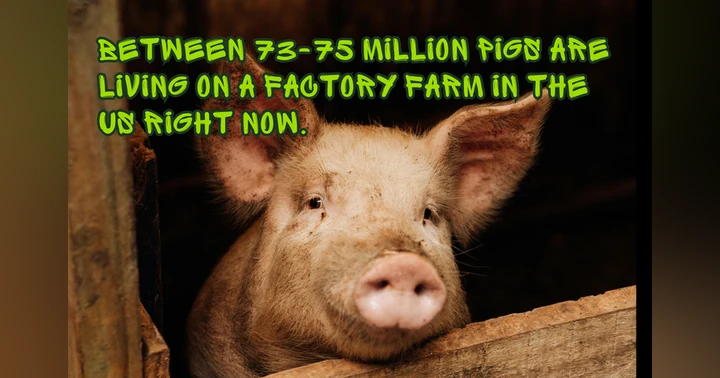
Protein Deficient Vegan:During last week's episode, we covered what happens to the waste from 73 to 75 million pigs that are currently living in factory farms in the U.S. We talked about how it impacted neighboring communities, drinking water, human health, environmental, nearby aquatic life, and worker safety. But today we're going to talk about the experience of the 73 to 75 million pigs in the U.S. right now. We will not be covering the topic of slaughterhouse or the transportation to the slaughterhouse because that has a lot going on there and this episode is probably already going to be a little long. Yeah. And I personally think it deserves its own episode.
Muscle Deficient Vegan:Yeah, it's definitely a different topic. This is mostly about welfare conditions on the farm.
Protein Deficient Vegan:Yeah. We will call out the section that contains trigger warnings so that you can pause it or skip ahead if you need to.
Muscle Deficient Vegan:So most people's perception of pigs is really misguided. You'll hear that they're like dirty, unintelligent, stinky farm animals, which is not really the case. So let's talk about a few of those and talk about where the misconceptions came from.
Protein Deficient Vegan:Historically, pigs have been kept around human waste, garbage, in muddy lots and cramped pens. The environments that they're kept in are dirty, but that's because people have combined a bunch of pigs to a very small area.
Muscle Deficient Vegan:Yeah, it would be pretty dirty, too, if you're crammed into a room with 100 other people.
Protein Deficient Vegan:Yeah, never allowed to leave it. Yeah, just like imagine you had 10 puppies and you put them in a tiny little pen and never took them outside to the bathroom. They'd get pretty gross and dirty as well.
Muscle Deficient Vegan:Yeah, and I think modern pig farms today have reinforced this image because they house like thousands of pigs, sometimes tens of thousands of pigs indoors. So they're all crammed together. They're on like concrete or slatted floors, like we talked about last week, over top of the manure pits. Yeah. And the idea there is like they just go to the bathroom all over the floor and then eventually like it's not even that it like falls down through the pit. Right. They're not going to the bathroom over the hole in the floor. No. They like go to the bathroom and then eventually they like lay on it or step on it and it like pushes it through the slats eventually. So they're just covered in all kinds of crazy stuff. They also don't have enough space to separate their resting area from the area where they do go to the bathroom because pigs don't really like those to be the same area.
Protein Deficient Vegan:Yeah. So what are they naturally like? Both wild and domesticated pigs with enough space are actually very clean animals. They create separate areas for their sleeping, eating, and the space where they would go to the bathroom. And they actually very intentionally avoid defecating and urinating in spaces where they would rest. And if they've got enough room, they will do that.
Muscle Deficient Vegan:Yeah, which they don't have the option to do in a factory farm environment.
Protein Deficient Vegan:Pigs do wallow in the mud, though, which is funny because you'll hear people say, oh, I'm sweating like a pig, but pigs don't actually sweat very much at all, which is why they wallow in mud. It cools their body and it protects them from sunburns, repels insects and parasites, and also soothes any skin irritation.
Muscle Deficient Vegan:It's really interesting. So, these are kind of like a lotion slash sunscreen.
Protein Deficient Vegan:Yeah.
Muscle Deficient Vegan:I wonder if they work for us.
Protein Deficient Vegan:It's like a lotion, sunscreen, and air conditioning. Yeah.
Muscle Deficient Vegan:Can I just go roll in the mud before a hot day outside? Do you think it would work?
Protein Deficient Vegan:If you want to. You can do whatever you want.
Muscle Deficient Vegan:I wonder if it works.
Protein Deficient Vegan:I'll have to try it out. Go for it.
Muscle Deficient Vegan:So people also tend to think that pigs are dumb. So let's talk about the reality of that. Historically, we've never really put pigs in a position to show how smart they are. With dogs, which are more typically pets, we teach them like tricks and interact with them and have them go fetch, things like that. But with pigs, we just kind of treat them like numbers. Like you have 100 pigs, you're pig 42. too. Like, I don't know if you do tricks or not. Yeah. So they are rarely known by anyone as individuals. I mean, I'm sure there are some small farm cases where the kid has a favorite pig for a little while. But outside of that, in a factory farm situation, that's not really a thing. We've also put almost no effort into understanding their cognitive abilities because they've mostly been used for food.
Protein Deficient Vegan:Dogs or cats are so close to humans. We like live with them. We've been able to observe of how they interact and like what they do and like you can train them tricks but that's just not how pigs are kept i think also in general people kind of prefer to think of the animals that they're eating as dumb so they can feel a little better about it yeah you know what i mean it's like i think that most people would be put off from eating like a monkey like you said because we share so many characteristics with monkeys right and i think that also be put off by eating dogs because like you know dogs are intelligent like maybe you've had a dog that's a pet and And you've seen how... They relate to you. They can read your emotions and stuff. And it's like, yeah, that's probably one of the big reasons why you wouldn't want to eat a dog. I've also heard the word dumb being used to describe like cows and chickens, other farm animals. Like, I just feel like it's a very common phrase used to describe farm animals almost to like discount why they should not be eaten.
Muscle Deficient Vegan:You know? Right. Yeah.
Protein Deficient Vegan:Yeah.
Muscle Deficient Vegan:Like chickens, like bird brains, stuff like that.
Protein Deficient Vegan:Right. Yeah, yeah.
Muscle Deficient Vegan:So as far as intelligence, what's kind of the truth here for the studies and stuff we have done? So modern research actually shows that pigs can do a lot of interesting things. They can remember objects. So there was one study that exposed pigs to a sample object for two days, and they remembered the object for at least five days after that. And interestingly, they prefer new objects to ones they've already seen. So like humans, they kind of seek out novelty.
Protein Deficient Vegan:Yeah. I think that's really cool. They're just curious little dudes.
Muscle Deficient Vegan:Yeah, they're like, I've already played with that toy. Give me a new toy.
Protein Deficient Vegan:Yeah, I want a new toy. I constantly want new toys. They also can solve puzzles and navigate mazes, especially if it's for food rewards.
Muscle Deficient Vegan:They can also remember solutions for long periods of time, especially with food searching tests.
Protein Deficient Vegan:Yeah, food's a big one here. Yeah.
Muscle Deficient Vegan:And they can recognize individual people.
Protein Deficient Vegan:I thought that was cool.
Muscle Deficient Vegan:If there's food to be found, the pig will find it, and they will remember how to find it in the future.
Protein Deficient Vegan:They got excellent little noses and really good little brains. Yeah. They can also, this one I thought was really cool. So they can also use mirrors to locate hidden food. Yeah. Now, one of the signs of intelligence with, I think, monkeys is that they can recognize themselves in the mirror. Yeah. So they haven't found that with pigs yet. But one study, after five hours spent with a mirror, the pigs were shown a familiar food bowl visible in the mirror only, but hidden behind a solid barrier. Seven out of eight of the pigs found the food bowl in an average of 23 seconds by going away from the mirror and around the barrier.
Muscle Deficient Vegan:I know people who couldn't do that. I know.
Protein Deficient Vegan:We get into this later, but compare them to the intelligent level of a three-year-old. Yeah. I feel like not many three-year-olds could do that. I'm going to be honest.
Muscle Deficient Vegan:Yeah, that'd be tricky, I think. Never tried it, but that seems like.
Protein Deficient Vegan:But this is also like, they haven't been introduced to a mirror before.
Muscle Deficient Vegan:Yeah.
Protein Deficient Vegan:I think it's like the big one, right? Right. So they showed naive pigs the same thing, like, and they just kind of went and looked behind the mirror. So it proves that they can learn after, what was it, five hours? Yeah. They figured out how a mirror works.
Muscle Deficient Vegan:Yeah. And naive pig in this context means a pig that hasn't done the experiment before. They've never seen a mirror before. They don't know how it works.
Protein Deficient Vegan:But like, pigs can figure out how mirrors work? I just think that's crazy. That is crazy.
Muscle Deficient Vegan:They can also understand, like, symbolic cues, so basically like a picture or a symbol on a card to represent food or water or something like that. They can learn from other pigs. That's pretty cool.
Protein Deficient Vegan:That is really cool. Yeah. They have perception of time and the ability to anticipate future events. So a study was done where female pigs were given two crate options with different confinement times. So one crate option was 30 minutes of confinement, and the other crate option was 240 minutes in confinement. And they showed an overall preference for the shorter confinement time.
Muscle Deficient Vegan:To me, this one seems, like, really intelligent. I don't know, like, what the scales are or where this falls, but being able to, like, predict, like, oh, this is a crate where I have to sit around for much longer.
Protein Deficient Vegan:That's crazy.
Muscle Deficient Vegan:That's, like, much more than just instinct of it.
Protein Deficient Vegan:Yeah, I think it shows they can get bored. Yeah. Like, like, oh, I was like really bored in that one.
Muscle Deficient Vegan:Yeah. Like I remember I was really bored for a really long time.
Protein Deficient Vegan:Yeah. Yeah. Well, it's funny because similarly, I think I read once that dogs can kind of predict what time you're coming home, but it was more based on scent. Yeah. Like they, they have like a real good instinct of like, oh, well, like my human does, the air doesn't smell like as much like my human as it did when they left. And now I know like when it gets to that low point, they're probably coming home from work. Yeah.
Muscle Deficient Vegan:That's interesting.
Protein Deficient Vegan:Yeah, but, like, still kind of a different perception of time. But the time perception, I think, is...
Muscle Deficient Vegan:Yeah, they don't exactly have wristwatches.
Protein Deficient Vegan:Yeah. I mean, I think that's, like, pretty interesting.
Muscle Deficient Vegan:That is interesting.
Protein Deficient Vegan:It shows that they're probably, like, thinking. And they're, like, bored. And, like, when am I going to get out of here? This is, like, awful. Yeah.
Muscle Deficient Vegan:They can also learn a joystick and computer tasks. So pigs can play video games, more or less. It doesn't say that, but I am extrapolating that pigs can play video games based off the fact that they can learn a joystick and can do computer tasks.
Protein Deficient Vegan:I'm imagining a pig playing video games, and that's fucking adorable. Can you imagine it?
Muscle Deficient Vegan:No.
Protein Deficient Vegan:Like the little pig from Babe playing video games, like Pac-Man? Yeah. Adorable.
Muscle Deficient Vegan:Except instead of the little Pac-Man noise, like the... I, like it. They can also engage in social play, like shaking or carrying an object like a ball or stick.
Protein Deficient Vegan:Just like a dog. Yeah.
Muscle Deficient Vegan:From everything I've read about pigs, they seem very similar to dogs.
Protein Deficient Vegan:I know. I kind of like want a pig.
Muscle Deficient Vegan:Very large dogs.
Protein Deficient Vegan:Very, very large dogs. And then some researchers, like Cambridge's Donald Broom, have said that pigs can be cognitively more sophisticated than three-year-old humans.
Muscle Deficient Vegan:Yeah.
Protein Deficient Vegan:That's crazy.
Muscle Deficient Vegan:It is crazy. They're also, kind of like I was just talking about, comparable to dogs on intelligence. They typically will match them on a lot of tasks or even beat them on some memory and problem-solving specific task. And that's from a study from 2015, which we'll also link in the show notes. Yeah. And then again, Donald Broom from Cambridge argued that pigs can be even more, cognitively sophisticated than dogs because they communicate differently. Dogs will wag their tails, make eye contact and seek out praise. But pigs actually communicate through vocalizations, scent, body posture and touch. So it's a lot more kind of nuanced method of communicating, but it also includes vocalizations, which is really interesting. I mean, obviously dogs bark. Yeah. But, you know, the pigs kind of do a little bit of everything.
Protein Deficient Vegan:I think, right, because I think when dogs bark, it's kind of hard to tell, like, are you happy? Are you wanting something? But, like, I feel like when pigs get excited, like, you can really, you can tell from their voices, even if you haven't been around pigs much. It's like you kind of tell, like, oh, that's like joy. That's excitement. Right.
Muscle Deficient Vegan:Right. Now, these differences also lead to people underestimating them because they're not quite as obvious that they're intelligent based on their behaviors, but they have their own way of doing these communicative behaviors.
Protein Deficient Vegan:Yeah. You just need to understand the pig and then you'll see how smart they are.
Muscle Deficient Vegan:That's right. Be one with the pig.
Protein Deficient Vegan:Be one with the pig. What was that? Baa-ram-ewe.
Muscle Deficient Vegan:Yeah, yeah.
Protein Deficient Vegan:I don't remember what that means.
Muscle Deficient Vegan:It was really cool. It was a battle cry.
Protein Deficient Vegan:Yeah, for the sheep, right? Yeah, yeah. Baa-ram-ewe.
Muscle Deficient Vegan:Yeah, it meant something. I don't want to watch it again, I guess.
Protein Deficient Vegan:We need to watch Babe again. Shucks. Such a good movie. So another thing you might hear is that pigs will eat anything or like the common phrase of you eat like a pig.
Muscle Deficient Vegan:Yeah.
Protein Deficient Vegan:Historically, pigs have been given scraps. So families would feed them vegetables, scraps or stale bread, spoiled produce, like any kitchen leftovers. Yeah. So since pigs would eat the things that humans wouldn't eat, humans are just assuming that they'll eat anything.
Muscle Deficient Vegan:And to be fair, the pigs will eat anything.
Protein Deficient Vegan:I learned that from Hannibal.
Muscle Deficient Vegan:Yeah, that's just not what they want to eat.
Protein Deficient Vegan:Right.
Muscle Deficient Vegan:Yeah.
Protein Deficient Vegan:Yeah. And I think, like, the obvious thing here to me is, like, if they're eating anything you give them, it's probably because they're hungry.
Muscle Deficient Vegan:Yeah.
Protein Deficient Vegan:So maybe if you gave them some of their food preferences, they wouldn't just eat everything.
Muscle Deficient Vegan:Yeah. I mean, humans will eat pretty close to anything if they get hungry enough. Yeah, absolutely. Yeah. So modern farm pigs are fed a calorie-dense feed, and they've also been selectively bred for rapid growth and efficient weight gain. Yeah. So they overeat basically because humans have genetically bred them to overeat. And that's all they have to do all day in their little cage.
Protein Deficient Vegan:Yeah. These genius little pigs can't do anything else. So it's like, what else am I going to do? I'm bored as fuck. Yeah. I'm going to eat. I eat when I'm bored as fuck.
Muscle Deficient Vegan:So what are the pigs like in nature then? If they are not forced to have these calorie dense feeds.
Protein Deficient Vegan:So pigs are opportunistic omnivores in nature, which means that they will kind of eat anything, but they do actually have food preferences. and they like to explore different things with their little snouts. And they'll sniff, lick, and mouth unfamiliar objects to see like what's going on with them even if they aren't planning on eating them.
Muscle Deficient Vegan:Yeah. And the wild boar do tend to stay leaner. Their intake rises and falls with what's seasonally available. So they will like fatten up in the fall with acorns before the winter. So they have, you know, extra calories to burn over the winter when it's harder to find food and stuff.
Protein Deficient Vegan:Right. Because they're smart and they know there's not going to be as much food. Right.
Muscle Deficient Vegan:But they're not eating like unlimited food year round.
Protein Deficient Vegan:Yeah. And they're having to walk a lot to find food too. So, you know, that probably helps lean them out.
Muscle Deficient Vegan:Yeah, for sure. Plus, if they're picky, you know, they're walking a lot to find the berries they like. Right. I don't know if they eat berries, but they find the thing they like.
Protein Deficient Vegan:Yeah, I'm just thinking like, oh, you know, this makes sense from what I've heard about pigs and like truffle hunting and stuff. It's like, yeah, they have very good noses. Yeah. They can figure out what they want to eat.
Muscle Deficient Vegan:Yeah. So, yeah, most of the like unkind pig stereotypes are basically human manufactured or based on like misunderstandings. Yeah. So it's like, yeah, maybe a pig on a farm is dirty and they eat a whole bunch of stuff. But that's because that's like the only option we've given them. Yeah.
Protein Deficient Vegan:You put them in that position and now you're making fun of them.
Muscle Deficient Vegan:Yeah.
Protein Deficient Vegan:It's ridiculous.
Muscle Deficient Vegan:Yeah. That is sad when you put it that way.
Protein Deficient Vegan:Yeah. So now that we've covered how intelligent and clean pigs are, let's talk about how they are as individuals. Because I think this piece might be one of the most interesting pieces.
Muscle Deficient Vegan:Yeah.
Protein Deficient Vegan:Studies have shown that pigs show optimism and pessimism.
Muscle Deficient Vegan:Hmm. That's interesting.
Protein Deficient Vegan:So, like, they can kind of, like, predict if something's going to be good or bad. Yeah. I was also reading that apparently they can tell optimism and pessimism from, like, the other pigs that are around. Like, if they're showing, like, optimism, like, they're excited about something, like, maybe they're getting, like, food reward or something. Like, one pig that doesn't know the food reward's coming can pick up on that behavior and know that, like, something exciting's happening.
Muscle Deficient Vegan:So, can a grumpy pig bring down the whole vibe?
Protein Deficient Vegan:Probably, I think. Yeah, actually. I did read that.
Muscle Deficient Vegan:It's true. That's interesting.
Protein Deficient Vegan:Not really grumpy, but like depressed.
Muscle Deficient Vegan:Yeah.
Protein Deficient Vegan:They also experience stress and can become very anxious.
Muscle Deficient Vegan:Yeah. That makes sense. I think almost all animals have like stress response. Yeah. You were talking about depressed. They can develop depression like symptoms and behaviors under poor conditions. So it's not like it's not like they don't care what condition they're in. Like if you put them in a bad condition, they will get actively depressed.
Protein Deficient Vegan:Yeah.
Muscle Deficient Vegan:Same. They'll also comfort pigs they're familiar with. So if they notice that a pig is depressed and they know the pig, they'll be like, hey, what's up, buddy? What's got you down today? Do you want some food?
Protein Deficient Vegan:So pigs are really sweet, too. Yeah, and they can recognize individual pigs and also individual humans.
Muscle Deficient Vegan:That's pretty cool.
Protein Deficient Vegan:Yeah. I was reading if there's a human they like, they will show more interest in them versus a human that they don't like.
Muscle Deficient Vegan:Yeah. And this is kind of what you were talking about, but they can also experience emotional contagion, which is basically like witnessing an emotion in another pig and then they start to feel that way.
Protein Deficient Vegan:Yeah. It's basically empathy.
Muscle Deficient Vegan:Yeah, exactly.
Protein Deficient Vegan:Pigs are empathetic. Isn't that cool? It is cool.
Muscle Deficient Vegan:And so there was a study for this where some naive test pigs, and again, naive just means like they haven't been put in this situation before. They're not familiar with it. So some naive test pigs were exposed to penmates who had been trained to anticipate upcoming rewarding events like receiving straw and chocolate raisins.
Protein Deficient Vegan:Can't give that to a dog.
Muscle Deficient Vegan:Yeah, that's true. Or aversive events, bad events, like social isolation. When the naive pigs were placed in the company of the trained pigs, they adopted the same emotional anticipatory behaviors, like their ear and tail postures and increased cortisol release, as the trained pigs who did have the direct experience.
Protein Deficient Vegan:I think that's so interesting.
Muscle Deficient Vegan:So, yeah, they get in a group and there's like the group that's familiar with like they're about to get the chocolate covered raisins. They all get really excited. And this new pig who doesn't know what's going on. They're like, oh, I'm excited. Why am I excited? I don't know. Something good's about to happen. Yeah. And then also the other way around for bad stuff.
Protein Deficient Vegan:It's like really interesting. Like, I think that shows a lot of intelligence, too. Yeah. Just that you can like pick up the vibes around you.
Muscle Deficient Vegan:Yeah. Every pig also has an individual personality.
Protein Deficient Vegan:Researchers have described differences in boldness, curiosity, sociability, playfulness, exploration, aggression, and fearfulness. So, like, they're all different on all of those different personality traits.
Muscle Deficient Vegan:Yeah, it's like any, it's like other animals that people have traditionally kept as pets, like dogs or cats. Everybody who's ever had a pet knows that even within the same breed or, like, even, like, siblings in the same litter can have really different personalities. Oh, yeah. So, I mean, pigs are no different.
Protein Deficient Vegan:They're just little individuals.
Muscle Deficient Vegan:Out in nature, the pigs naturally live in their family groups and, like, multi-generational groups even. Close, like, mother-offspring relationships. and adult males will often leave the family.
Protein Deficient Vegan:What a shocker. No, but the females actually stay together for years and like raise the next generation of pigs, which I thought was really sweet.
Muscle Deficient Vegan:I wonder how many other animals are like that.
Protein Deficient Vegan:It kind of sounds a little matriarchal.
Muscle Deficient Vegan:So next, let's talk about like what a pig wants or what a pig needs.
Protein Deficient Vegan:What a pig wants, what a pig needs.
Muscle Deficient Vegan:I think that was the actual original lyric.
Protein Deficient Vegan:I think it was too.
Muscle Deficient Vegan:And then they had to change it for the radio or something.
Protein Deficient Vegan:Yeah, they were like, no one's going to get this. Nobody knows what pigs want and what pigs need, but I think she should have went with the original.
Muscle Deficient Vegan:Yeah, me too. And so that versus what they actually get in a factory farm.
Protein Deficient Vegan:So what do they need?
Muscle Deficient Vegan:So in the wild, they need to be able to root around with their noses.
Protein Deficient Vegan:Their cute little noses. Yeah. Their little snouts.
Muscle Deficient Vegan:Yeah. And I know this maybe doesn't sound like a need, but this actually is a thing that pigs need to be able to do or they start getting pretty aggressive and depressed and sad. So this is a really big part of being a pig.
Protein Deficient Vegan:Well, the pig's nose is actually the most sensitive organ in their body, and they have an excellent sense of smell, so that kind of makes sense.
Muscle Deficient Vegan:Yeah, definitely. They'll spend hours every day digging, rooting, searching around for roots, insects, bulbs, mushrooms, seeds. And you've heard about, like, the pig truffle hunting thing. That's definitely real.
Protein Deficient Vegan:What was that? Isn't there, like, a Nicolas Cage movie about, like, a truffle hunting pig?
Muscle Deficient Vegan:I think there's a Nicolas Cage movie about everything, so I would assume so, but I'm not familiar with the movie.
Protein Deficient Vegan:I can't remember it. I think I watched it with my parents, though.
Muscle Deficient Vegan:If there is one, I'm sure it's amazing and we need to watch it. Yeah. They don't do it just for entertainment. It is like an essential behavioral need for the pigs.
Protein Deficient Vegan:Yeah. If they don't get to root around with their nose, they have increased frustration. They can start behaving abnormally, such as like biting their tails and just their aggression levels overall increase.
Muscle Deficient Vegan:Yeah. They'll like start biting other pigs' ears and getting fights and all kinds of crazy.
Protein Deficient Vegan:I mean, that makes sense. They're highly intelligent. Like, this is one of the things that they do to explore the world, you know?
Muscle Deficient Vegan:If somebody locks a person in a cage or, like, a cage, like a padded room or whatever, like, they're going to get pretty aggressive.
Protein Deficient Vegan:Yeah, they're going to get a little aggressive. Yeah, I mean, it's like, these are highly intelligent animals. Like, part of the way they show intelligence in the wild is by exploring things and, like, sniffing things out, like, discovering new foods. And it's like, yeah, if they can't do that, that's a problem.
Muscle Deficient Vegan:Yeah, I think I'd act the same way.
Protein Deficient Vegan:I would, too.
Muscle Deficient Vegan:Pigs also need to be able to explore in general. In the wild, pigs are constantly investigating smells, sounds, and textures because they're naturally very curious animals. There is literally nothing for a pig to do or explore in a factory farm. Yeah. They can often not even, like, walk around, really.
Protein Deficient Vegan:Sometimes they can't even turn around. Yeah. So, you know.
Muscle Deficient Vegan:And they can't smell anything because the smells are all overwhelmed by, like, the disgusting smell of the indoor facility. Right.
Protein Deficient Vegan:Yeah, exploration and discovery are also critical for, like, healthy development of pigs. Just imagine, like, locking up your pet, your cat, your dog in a tiny cage that they could never, ever, ever leave. Like, just imagine how they would act.
Muscle Deficient Vegan:Yeah, not great, I would think. No. And also, kind of like we touched on earlier, pigs really want to be clean. They need to be given enough area to have different spaces for eating, sleeping, going to the bathroom, just like humans and dogs. And also, since like we talked about earlier, they do have special things they need for temperature regulation, which is not only the wallowing in the mud, but also shade and water are really, really important for a pig.
Protein Deficient Vegan:Yeah, they need those things to cool down and also protect them from the sun and bugs. And because if you think about it, like pig skin is kind of like our skin, like it's not protected by fur. Yeah. And like, think about how our skin interacts with like the sun without sunscreen and stuff.
Muscle Deficient Vegan:As an aside, if you're finding this podcast interesting and you're not already subscribed, we'd appreciate it if you subscribe. Maybe if you're listening on YouTube, you can give us a like. That really helps us out.
Protein Deficient Vegan:So now for the trigger warning, we are going to be talking about the actual reality of most factory farms in the U.S. But for some perspective first, so wild boars generally live four to five years, but some can actually survive up to 10 years in the wild. However, domesticated pigs, like the ones that you'll find in factory farms, can live between 10 and 15 years naturally.
Muscle Deficient Vegan:Sometimes up to 20 years if they're really well cared for.
Protein Deficient Vegan:In contrast, pigs on a factory farm only live to an average of six months old.
Muscle Deficient Vegan:That is super sad. It is very sad. This is actually one of the things that in all these conversations about factory farm animals and like how they're treated so well and their farmers like take care of them. That's the part that really gets to me the most. It's like no matter how well they're treated, like chickens are living like 39 days or something. Pigs are six months. Cows are a very short percentage of their life. Like it doesn't matter how well you're treating the animal. if you're cutting its life down by, like, a tenth every time.
Protein Deficient Vegan:Oh, I know. Yeah, they could naturally live maybe up to 20 years, and you're letting them live half of a year.
Muscle Deficient Vegan:Yeah.
Protein Deficient Vegan:They don't even get to, like, I don't know, probably full brain functionality and, like, understanding things before they're gone. Yeah. It's very sad. Yeah. Female pigs that are used for breeding, they usually live to be about two to three years old. But, of course, like, they're being constantly bred over and over again during those two to three years. So it's like not a good time. From a very detailed study on the welfare of pigs that we will link in the show notes, this is from the European Food Safety Authority, the EFSA panel on animal health and welfare. The 16 highly relevant welfare consequences identified are restriction of movement, resting problems, group stress, isolation stress, separation stress, inability to perform exploratory or foraging behavior, inability to express maternal behavior, inability to perform sucking behavior, prolonged hunger, prolonged thirst, heat stress, cold stress, locomotory disorders, including lameness, soft tissue lesions, and integument damage, respiratory disorders, and gastroenteric disorders. Of these, Only inability to perform exploratory or foraging behavior was considered highly relevant for all pig categories under consideration.
Muscle Deficient Vegan:Right. And that's because basically no matter what else is going on, they can't move around much.
Protein Deficient Vegan:Yeah. So we're going to cover a lot of this in more detail, starting with the amount of space that most pigs have.
Muscle Deficient Vegan:Yeah. So there are a couple of different ways that pigs are kept. A couple of those are also crates. So the first one is a gestation crate, which houses individual pregnant sows, which are female pigs. It's only about seven feet by two feet. And just like that might sound big to you, seven feet, but you should know that pregnant pigs are about seven feet long and then about two feet in width. So this is basically the size of the pig.
Protein Deficient Vegan:Right. They have virtually no space. Right.
Muscle Deficient Vegan:And it is only three or four feet tall as well.
Protein Deficient Vegan:Yeah. They're confined there for most of their 114-day pregnancy and moved to farrowing crates shortly before giving birth. The floors are typically bare and slatted with either concrete, metal, or plastic so that waste can drop down and there's no nesting materials.
Muscle Deficient Vegan:Next is farrowing crates, which are metal enclosures used to house the mother sows just before giving birth and also while nursing. So it basically moved from the gestation crate to the farrowing crate right before they give birth, and then the babies are in there with them. They're usually around the same dimension as the gestation crate. And, yeah, they usually get moved into the crate a few days before giving birth and remain there for like three to four weeks while nursing the babies. The sides of the crate are designed with gaps so the piglets can safely access the mother to nurse and not be crushed. So the mother pig is inside the crate with the slats and the baby pigs are outside of it.
Protein Deficient Vegan:Right. And factory farms will say that they need farrowing crates to keep the mother from accidentally crushing the babies. But in nature, this is like much less of a concern because the mother pigs actually possess very strong maternal instincts and deliberately build safe, contoured nests which gently guide their babies from danger. So like. Yes, crushing happens in nature, but it's like a lot less likely. And so the baby crushing problem the factory farms are trying to fix is oddly enough, the one that they've pretty much created in the first place by not allowing the mother pig to have enough room and space and resources to build a nest like she would in the wild. So they kind of are like, hey, the mother pig is like so careless and keeps crushing her babies. And it's like, oh, well, you keep giving her no place to move.
Muscle Deficient Vegan:Right. I mean, they're in this crate. Like, where would the babies go?
Protein Deficient Vegan:Yeah. The mother can't even move. Like, you're blaming her for crushing the babies?
Muscle Deficient Vegan:Yeah. And then, so for the actual facilities themselves, typically they use finishing barns is what they call it, which is basically a large confinement house designed to hold about 1,000 to 2,500 pigs at once. The pigs enter the barns around 40 to 60 pounds and then spend the next four months there until they weigh about 270, 280 pounds. And then they are shipped off for the slaughter.
Protein Deficient Vegan:Yeah.
Muscle Deficient Vegan:Those buildings also have the slatted floors. And each pig only has about seven and a half to eight square feet of space, which is basically like a two and a half foot by two and a half foot box for a 280 pound pig.
Protein Deficient Vegan:Yeah, which is crazy because like we're recording the podcast. We're sitting in like rolling chairs. Right. And like, I think we're each taking up more space than the pig has. Yeah. Right. Just like where our legs are positioned and like the width and stuff of the chair. Right.
Muscle Deficient Vegan:Yeah. I can't imagine a 280 pound pig being on the floor under my chair.
Protein Deficient Vegan:No, it's insane. And then they're also like squished. Right. Because it's not like they're just like all on top of each other, basically. Right. So if you're part of our book club, you've already probably read this. But we really like, by the way, we really like the book Eating Animals. It's a really good place to start if you don't know a lot about this stuff. I'm going to read an excerpt from the book Eating Animals. A study by the European Commission's Scientific Veterinary Committee documented that pigs in crates showed weakened bones, higher risk of leg injuries, cardiovascular problems, urinary infections, and a reduction in muscle mass so severe that it affected the pig's ability to lie down. Other studies indicate that poor genetics, lack of movement, and poor nutrition leave 10 to 40 percent of pigs structurally unsound due to such conditions as buckling of the knees, bowed legs, and pigeon toes. An industry periodical National Hog Farmer has reported that 7 percent of breeding sows typically die prematurely from the stress of confinement and intensive breeding. In some operations, the mortality rate exceeds 15 percent.
Muscle Deficient Vegan:That sounds pretty bleak. And, you know, a lot of the issues with, like, the crushing or whatever, it's like they can't even use their legs to stand up. They can't lie down with any control. So, like, they just don't have any options here for, like, how to move around or be safe or anything.
Protein Deficient Vegan:Right. I mean, which makes sense because it's like... You think about if you were forced to lay down constantly and could barely move and stuff, like, obviously your muscles aren't going to work properly.
Muscle Deficient Vegan:Right.
Protein Deficient Vegan:Because you're not moving around. You're not getting, like, any exercise at all.
Muscle Deficient Vegan:Yeah. So another thing about the facilities is the flooring. We talked about it a little bit, but it's typically concrete, metal, or plastic. There are no bedding materials at all in most of these facilities. And then they also have the partially slatted floors.
Protein Deficient Vegan:Right.
Muscle Deficient Vegan:So the impacts of this are like the joint problems and the lameness, which basically means you can't walk around properly. The lesions and the abrasions, because they have constant friction against like the hard surfaces. There's no soft hay or like material, obviously no fabrics or anything to keep them from rubbing up against stuff.
Protein Deficient Vegan:And things like they have skin like us.
Muscle Deficient Vegan:Yeah. Right.
Protein Deficient Vegan:So, like, imagine having to lay on a concrete floor. Yeah. Or a metal floor. Yeah. Like, as a human.
Muscle Deficient Vegan:Yeah, I remember there was one small quote in Eating Animals where one of the farmers basically said, like, there aren't really pigs here that don't have sores on them.
Protein Deficient Vegan:Yeah.
Muscle Deficient Vegan:Yeah. Also, hoof and foot injuries and sole bruising. So, the gaps between the slatted floors and the rough edges can catch the pig's feet. Obviously, they're having to walk around on floors that have slats big enough for their waste to fall through. So that's not, it's a little precarious, I'm sure. And it's constant.
Protein Deficient Vegan:Right.
Muscle Deficient Vegan:They also get lacerations and infections because the pigs can slip or get their legs caught in the slatted floors.
Protein Deficient Vegan:Which makes sense that they're slipping because there's poop on the floor, maybe water that they, like, use to get the waste through the slats. Or urine. Yeah, or urine. Yeah.
Muscle Deficient Vegan:And then they also have an inability to root. So they have nowhere to go and nothing interesting to explore, which, like we said, can be really damaging to their health and well-being.
Protein Deficient Vegan:Another issue can be the air quality. So it's actually pretty dusty in a lot of these factory farms. and what makes this more problematic in like a pig factory farm is that the airborne dust usually carries hazardous gases like ammonia and hydrogen sulfide. So last week we got into some of the details of hydrogen sulfide, also known as H2S, which is a byproduct of manure decomposition. So manure is going to decompose and when it decomposes it creates H2S. H2S is an asphyxiant which means it displaces oxygen in your body. In fact, OSHA has actually cited H2S as one of the leading causes of industrial fatalities. That's how toxic it is. We also talked in the last episode about how even workers in these factory farms can die getting exposed to it. I think one of the stories we talked about was like six workers went down and passed away. So, yeah, if it can kill a human, it can also kill a pig. Yeah. Right? So you have H2S, you also have ammonia, which is also a result of decomposition.
Muscle Deficient Vegan:Yeah, you don't often have a situation where ammonia is like the less bad thing.
Protein Deficient Vegan:Right, exactly. Right. Like very toxic. Right. So like the dust is carrying these toxins into the air where the pigs are like having to breathe it nonstop. And they're very confined to it. They just don't have a lot of space. And it gets very crowded in there. There's, like, a lot of manure decomposing. Yeah. So, yeah, the air quality is really bad. And we'll talk about some of the respiratory problems later in the episode. But just keep the air quality piece in mind.
Muscle Deficient Vegan:Yeah. Also, a general lack of enrichment. So, they don't have any soil, any grass, any branches or, like, rooting materials that they can get a hold of, which causes a lot of general abnormal behaviors because that's a big part of their psychology.
Protein Deficient Vegan:Yeah. One of these abnormal behaviors is tailbiting, which can result in injuries and infections. Tailbiting is not considered a normal pig behavior. And some of the reasons tailbiting can occur is overcrowding, boredom, stress, a lack of enrichment, poor ventilation, and inadequate diet. And then sometimes to prevent tailbiting, factory farms are routinely cutting off piglets' tails without anesthesia.
Muscle Deficient Vegan:Yeah, that's pretty sad. You know what else could prevent tailbiting?
Protein Deficient Vegan:Is it ending factory farms?
Muscle Deficient Vegan:Yeah, that could do it.
Protein Deficient Vegan:I agree.
Muscle Deficient Vegan:Some other stress behaviors that pigs will often exhibit that are typically shown in animals that are suffering from deep psychological distress are bar biting, so biting on the bars of cages, sham chewing, which is basically they continuously make a chewing motion, but there's nothing in their mouth. And then repetitive head movements.
Protein Deficient Vegan:Yeah. And then, you know, these are similar to behaviors that you might see in like animals that are like in a zoo, confined in a zoo or something.
Muscle Deficient Vegan:Yeah. Now, another small quote from the book Eating Animals says, Many pigs go insane due to the confinement and obsessively chewing on their cage bars, incessantly press their water bottles or drink urine. Others exhibit mourning behaviors that animal scientists describe as learned helplessness.
Protein Deficient Vegan:Coming back to the part about respiratory disease, this is another excerpt from the book Eating Animals. Fully 30 to 70 percent of the pigs will have some sort of respiratory infection by the time of slaughter. And mortality from respiratory disease alone can be four to six percent.
Muscle Deficient Vegan:Yeah. So this is like a general trend. And this is, you know, an idea that I read about in Eating Animals, what I've seen in other places where they really just keep the animals like in a, healthy enough to survive until they go to slaughter. Like, if they were in these conditions, they would not live very long if they weren't sent off. So it's like they're not really trying to keep the animals healthy. They're just keeping them from the point where they're so sick they die before they can send them to slaughter.
Protein Deficient Vegan:Right. Which... they only make it to six months. So like you don't have to keep them very healthy at all, right? Yeah, I mean, it's just the whole thing is kind of crazy. Like the fact that they're in bad enough air quality conditions that 30 to 70% are suffering from respiratory infection and like so bad that 4 to 6% are dying from it. Those are staggering numbers. Indoor confinement increases the risk of pneumonia, influenza, and chronic coughing. So factors include dust, like we said, ammonia, and then also high stocking density, which is the term for it. This means that the pigs have no space and are kind of just living on top of each other. This can cause rapid airborne transmission of bacterial and viral agents throughout the herd.
Muscle Deficient Vegan:Yeah, obviously. I mean, there are a ton of viruses that spread through environments like factory farming.
Protein Deficient Vegan:Right.
Muscle Deficient Vegan:There's also the topic of lameness in general. Again, lameness is basically like you have an issue with your foot or your leg and you can't walk properly. So an Iowa State University study, which we will link in the show notes, found that about 86% of sows that slaughter had one or more foot lesions. Some of the frequently occurring issues were like joint injuries, hoof problems, leg weakness, and those affected both breeding sows and growing pigs.
Protein Deficient Vegan:A lot of this is caused by the hard and often slatted floors, but another contributing factor is the genetic breeding that has caused the pigs to grow, like, super fucking fast, and then the extra weight's bad for their joints and cartilage. So, like, pretty much all man-made issues here.
Muscle Deficient Vegan:Yeah, so even on a normal, stable, soft floor, they are heavier than their bodies would typically be able to support.
Protein Deficient Vegan:Right, because we've genetically bred them to gain weight faster for profitability.
Muscle Deficient Vegan:You know, we talked a little bit about the shortened lifespan, artificially shortened lifespans. So there's also a section on mortality statistics. Um, so in the book Eating Animals, they said that by the time farmers begin weaning the piglets, 9 to 15% of them will have died. Uh, some major causes of this include crushing, which we talked about earlier, but is less likely in nature because the mother pig has more room to nest. Um, another cause is starvation. So the sows here are bred to produce unnaturally large litters. That often means that the smaller, weaker piglets will struggle to compete for their mother's milk and starve.
Protein Deficient Vegan:That is really sad to me.
Muscle Deficient Vegan:Yeah. Chilling, in which piglets are very susceptible to cold stress if the temperature is not well-maintained, and that can turn into hypothermia. And obviously, the temperature is often not well-maintained in a facility like this. And then disease in general, overcrowded, unsanitary practices, obviously promote the rapid spread of infectious diseases.
Protein Deficient Vegan:Also, many piglets are born with deformities. And another section from the book Eating Animals, common congenital diseases include cleft palate, hermaphroditism, inverted nipples. no anus, splayed legs, tremors, and hernias. Within the first 48 hours, their tails and their needle teeth are cut off without any pain relief in an attempt to minimize the wounds that pigs will inflict on one another, which obviously isn't because they care about the pigs getting harmed. It's because it's like another money thing. They don't want to lose any of the pigs because they need to sell them.
Muscle Deficient Vegan:Right. And also after 10 days, male pigs often have their testicles removed without pain relief. And then in terms of sow health, the long-term breeding females might experience lameness, shoulder lesions, reduced body condition, and chronic injuries. Some of the same kind of things we've already talked about, but these are for the pigs specifically that they are using to breed.
Protein Deficient Vegan:So much of pig farming specifically revolves around the female pigs giving birth incredibly frequently. So I think it's like really important to cover this topic fully. Um, side note, only 3% of pigs breed naturally in factory farms. So the other 97% are artificially inseminated. In nature, mother pigs or sows are incredibly maternal. About 24 hours before giving birth, wild sows become extremely active. They may travel long distances searching for the perfect nesting site. They spend several hours building elaborate nests made out of grass, branches, leaves, straw, and other vegetation. And then, you know, this behavior is driven by hormones and occurs even if they've never seen another pig do it, which I thought was interesting. It's like very instinctive.
Muscle Deficient Vegan:Yeah.
Protein Deficient Vegan:So yeah, they're in their nesting phase. Like they know they're about to give birth. They go and they build like the perfect nest for their little piglets. It's very sweet.
Muscle Deficient Vegan:So the European Food Safety Authority, which has that detailed study we referenced earlier, and we'll include in the show notes, identifies nest building as an essential maternal behavior. and it recommends sufficient nesting materials such as long stem straw or hay. Um, so that's what happens in nature. The way it works in the factory farm is typically, like we talked about, the sows moved into a farrowing crate, which is that metal enclosure that restricts their movement. She often can't even turn around, walk freely, obviously gather any nesting material, build a nest. So these practices basically prevent every instinct that the mother pig has.
Protein Deficient Vegan:Yeah. It's like she wants to go do all these things. She knows she's about to give birth. She knows that her babies are going to need a nest and she can't even turn around. In the wild, when the piglets are born, the mother will communicate constantly with them through vocalizations. The babies will nurse whenever they want. The mother and the babies are able to interact freely. And then the mother will guide and protect the piglets. And the piglets even recognize the voice of their mother, which I thought was really cool.
Muscle Deficient Vegan:Yeah, I never heard about that. That's interesting. So in the factory farming situation, again, the crates basically restrict almost all of those normal interactions. There's metal bars in between them so that the babies can access the milk, but the mother can't really move, turn around, mostly interact with the piglets at all.
Protein Deficient Vegan:Which, man, this section makes me the most sad. I mean, we don't have kids, we're not having kids, but like, just the idea that like, you could just give birth to like... you know like a litter of piglets that you've been thinking about for like 100 days like you've been pregnant for like 100 days you know and you give birth to these piglets and then i mean i feel like there's not even from what i read barely any like skin to skin contact like they don't even get to like interact even at all yeah they're just immediately like put on the other side of like the metal grating or bars or whatever so it's incredibly sad
Muscle Deficient Vegan:Yeah so in the wild piglets will nurse frequently. They typically remain with their mother. They kind of start to gradually explore. They'll usually nurse for 10 to 17 weeks with weaning occurring naturally, obviously.
Protein Deficient Vegan:So 17 weeks is like a little over four months. Right. And then in factory farms, pigs don't even get to live to be six months. So like in nature, they basically have like seven weeks off the nip.
Muscle Deficient Vegan:And then male piglets will usually disperse from the family group around 8 to 10 months of age to live the bachelor life until they find a mate.
Protein Deficient Vegan:So in nature, female piglets often remain with their mother, joining the core maternal herd to help raise the future generation of pigs. So like, just... To recap, the male piglets, they don't even normally leave the family group until like 8 to 10 months old, which would be after they're slaughtered from a factory farm. And kind of the same with the piglets. Sometimes they stay for years, I read, with their mom helping raise the next generation. So, in reality, U.S. factory farm piglets are typically weaned between 17 and 21 days. That's like three weeks or less versus in nature, it's 10 to 17 weeks. But it's not uncommon for them to be separated from their mothers at 14 days or less. And because the piglet's digestive system and immune systems aren't fully developed at this young age, the sudden transition into like real food can cause a lot of stress and create complications like diarrhea.
Muscle Deficient Vegan:Yeah. So just in general, these animals don't do almost anything like they do in the wild.
Protein Deficient Vegan:Yeah.
Muscle Deficient Vegan:So this episode was mostly about the standard and intentional practices of the factory farm. We didn't really get into some of the even darker topics, like the individual abuses and malicious actions and other things like that that sometimes happen on farms. You know, there are a lot of documentaries out there where you can see that kind of thing. But this was more about like, this is this is just like how the farms operate as a business.
Protein Deficient Vegan:Yeah, these are the things that you can go find out right now about a factory farm that a factory farm is publishing. So if you want to learn a little bit more about this, I would really recommend reading the book Eating Animals. There are a few good sections that cover pig factory farming. um some of the details in those sections of the book are uh pretty horrific um and and more than we wanted to cover on the podcast we wanted to keep it focused on like standard practices um I think there are many books, many articles, many documentaries that can do a much better job showing, like, how grim it really is in a factory farm. I barely got through this podcast without crying, so I don't think I would be able to do it justice. So, and the material is already there, so I would say go check those out if you want more information.
Muscle Deficient Vegan:So, yeah, I think we're just going to leave it there for the main topic and, talk about some updates we have for deficient vegans in general. Our book club is wrapping up. We'll be putting a poll into the Discord soon to vote on the book for the next quarter.
Protein Deficient Vegan:Yeah. And so I would say Eating Animals was a pretty heavy book, just like the topic of this podcast. I think the three choices we're going to go with for options are probably going to be a little bit lighter this time. Because I know that we've traumatized a lot of people in our Discord with Eating Animals. So we're probably going to move on to like a little bit lighter of a vegan book next quarter if you want to join. We also have a mailing list. Technically, we have three mailing lists. We have one for muscle deficient vegan. If you want information on like fitness, nutrition, we have one for protein deficient vegan. That's me. I've heard of her. Yeah, it's like mostly recipes, tips and tricks for cooking and stuff like that. And then we have one for this podcast, which is the deficient vegans as a whole. The Deficient Vegans one kind of ties in our two brands. Plus, veganism is the center of it, but we also include, like... a recipe we're liking in the newsletter and maybe some other stuff.
Muscle Deficient Vegan:Yeah, we'll add sign-up links for those in the show notes and briefly mention what each weekly newsletter covers. Protein Deficient Vegan also has a free vegan protein guide ebook that we'll link in the show notes in case that would be useful for anybody listening or anybody you know.
Protein Deficient Vegan:Yeah, it's 110 pages. We're hoping it's a really useful resource, a useful free resource to like anyone that is vegan and maybe having trouble figuring out the whole protein thing or anyone that's trying to go vegan. It has 40 of my most popular high-protein recipes, including like breakfast, lunch, dinner, and snack recipes. It has sample weekly meal plans for 1,500, 2,000, 2,500, and 3,000 calories if that might be helpful for you. It also has a grocery store list with my favorite vegan protein staples, some cost and protein percentage analysis charts so that you can choose foods that were like within your budget and also your macros. There's a section on things to know about going vegan, some more resources, a section for resources where you can find more information about veganism, some tips and tricks for going vegan, and then just some of my personal tips for cooking vegan proteins, if you're just getting started. Yeah.
Muscle Deficient Vegan:So be sure to follow us on social media. Instagram is the one we tend to be most active on, but we're also on TikTok and YouTube.
Protein Deficient Vegan:And Facebook, sadly.
Muscle Deficient Vegan:Yeah, and Facebook. Yeah, so those links are in the show notes as well. We do share a lot of informational carousels and news from our new news segments. We also have some blog posts on deficient vegans. Some of the podcast episodes have a kind of companion blog post. Some of the blog posts may eventually be things that were not necessarily on the podcast. We're trying to make that a vegan hub, basically. Um, yeah. So if you enjoyed this and you're listening on Spotify or Apple podcast, if you could rate and leave us a review, that really helps the podcast get out there. And then if you're listening on Spotify or YouTube, you can also leave a comment if you have any questions or any feedback or anything you want to hear about on future episodes. All right. Well, I think that's it. Do you want to say bye?
Protein Deficient Vegan:Bye, guys.
Muscle Deficient Vegan:Bye, everybody.